
Zebra Knife Fish
Zebra Knife Fish
Couldn't load pickup availability
Zebra Knife Fish (Gymnotus pedanopterus) – Rare Striped South American Freshwater Knifefish
The Zebra Knife Fish is a rare and fascinating freshwater species admired for its bold striped coloration, elongated body, and remarkable ability to navigate using weak electrical signals. This distinctive South American knifefish is an exceptional choice for experienced aquarium enthusiasts seeking an unusual predatory fish with captivating natural behavior.
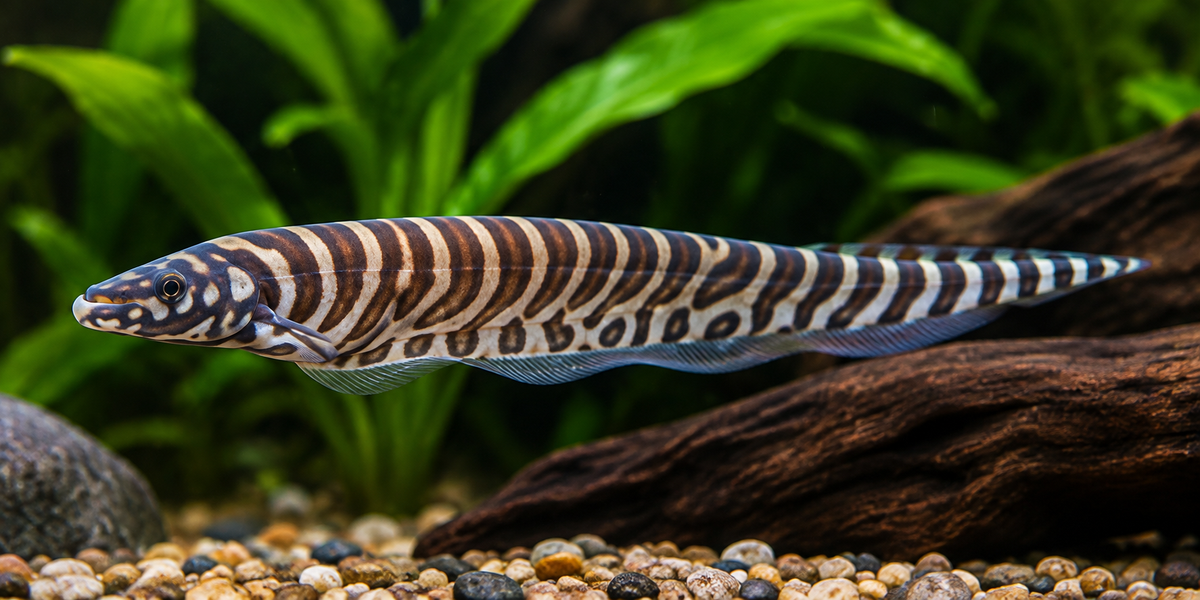
One of the most striking characteristics of the Zebra Knife Fish is its beautiful pattern of dark brown to black bands contrasting against lighter tan, cream, or golden-brown coloration. These irregular stripes create a zebra-like appearance that distinguishes this species from many other freshwater knifefish.
Scientifically known as Gymnotus pedanopterus, the Zebra Knife Fish belongs to the family Gymnotidae, a group of freshwater electric knifefish native to Central and South America.
The Zebra Knife Fish originates from South America, particularly freshwater habitats in Peru and Brazil. It inhabits slow-moving or still waters, including turbid river channels and sheltered bottom environments.
Unlike traditional aquarium fish that propel themselves primarily with their tail fins, the Zebra Knife Fish moves using a long, ribbon-like anal fin extending along the underside of its body. This specialized fin allows it to glide smoothly forward and backward with remarkable precision.
One of its most fascinating adaptations is its ability to generate a weak electric field. The Zebra Knife Fish uses specialized electrical organs and sensory receptors to detect objects, navigate dark environments, communicate with other knifefish, and locate potential prey.
This natural electrolocation ability makes the Zebra Knife Fish one of the most interesting freshwater predators available to aquarium enthusiasts.
Zebra Knife Fish are primarily nocturnal and secretive. During daylight hours, they often remain concealed beneath driftwood, among rocks, or inside caves. As lighting decreases, they become more active and begin exploring the aquarium in search of food.
Although generally shy around larger fish, Zebra Knife Fish are carnivorous predators and may consume smaller fish, shrimp, and other aquatic animals that fit into their mouths.
They can also become territorial toward other knifefish, particularly members of their own species. For this reason, maintaining a single specimen is generally recommended unless a very large, carefully managed aquarium is available.
The Zebra Knife Fish can reach approximately 11 inches or more in length. A spacious aquarium with substantial horizontal swimming room is essential for long-term care.
A minimum aquarium size of 75 gallons is recommended for a single adult specimen, with 100 gallons or larger preferred for improved swimming space and water stability.
The ideal aquarium should include natural driftwood, smooth rocks, caves, subdued lighting, and a soft substrate. Providing shaded hiding areas helps the fish feel secure and encourages natural behavior.
Zebra Knife Fish are carnivores that thrive on a diet of appropriate meaty foods, including earthworms, bloodworms, shrimp, and other suitable frozen or live foods. Some specimens may be reluctant to accept dry pellets or flakes.
With its striking striped coloration, remarkable electrical sensing abilities, and fascinating nocturnal behavior, the Zebra Knife Fish is an outstanding addition to a properly designed specialty freshwater aquarium.
Product Specifications
Scientific Name: Gymnotus pedanopterus
Common Name: Zebra Knife Fish, Zebra Knifefish, Zebra Banded Knifefish
Family: Gymnotidae
Fish Type: South American Freshwater Electric Knifefish
Care Level: Moderate to Advanced
Temperament: Semi-Aggressive, Territorial, and Predatory
Diet: Carnivore
Adult Size: Approximately 11 Inches (28 cm), Potentially Larger
Minimum Tank Size: 75 Gallons Recommended
Preferred Tank Size: 100 Gallons or Larger
Temperature: 72–82°F (22–28°C)
Recommended pH: 6.0–7.0
Water Hardness: 2–12 dGH
Water Flow: Gentle to Moderate
Water Conditions: Clean, Stable, Well-Oxygenated Freshwater
Recommended Setup: South American Aquarium with Driftwood, Caves, Smooth Rocks, and Subdued Lighting
Substrate: Fine Sand or Smooth Gravel
Swimming Level: Bottom to Middle
Compatibility: Appropriately Sized Peaceful to Moderately Assertive Fish
Shrimp Compatibility: Not Recommended
Plant Compatibility: Generally Suitable for Planted Aquariums
Origin: South America, Including Peru and Brazil
Breeding: Not Reliably Documented in Home Aquariums
Lifespan: Not Well Established for This Species; Potentially Long-Lived
Recommended Experience: Intermediate to Advanced Freshwater Aquarists
Key Features
-
Beautiful dark zebra-like body stripes
-
Rare South American freshwater knifefish
-
Fascinating weak electrical sensing abilities
-
Unique forward and backward swimming movements
-
Distinctive elongated body shape
-
Interesting nocturnal hunting behavior
-
Intelligent and highly specialized predatory fish
-
Excellent centerpiece for large specialty aquariums
-
Naturally explores driftwood, caves, and sheltered areas
-
Unique appearance compared with traditional freshwater fish
-
Highly desirable among collectors of unusual freshwater species
-
Fascinating natural electrolocation behavior
Aquarium Setup and Care Requirements
Aquarium Size: Provide a minimum 75-gallon aquarium for a single Zebra Knife Fish, with 100 gallons or larger preferred for adult specimens. Horizontal swimming space is especially important.
Aquascaping: Include large pieces of driftwood, smooth rocks, caves, and shaded resting areas. Arrange decorations to provide secure hiding places without restricting movement.
Substrate: Fine sand or smooth gravel is recommended. Avoid sharp or abrasive materials that may injure the fish's delicate skin.
Lighting: Subdued aquarium lighting is preferred. Floating plants and shaded areas can help the fish feel secure and encourage activity.
Filtration: Use efficient biological and mechanical filtration to maintain excellent water quality. Stable conditions are especially important because knifefish can be sensitive to environmental changes.
Water Movement: Gentle to moderate circulation is suitable. Provide sheltered areas away from strong currents.
Diet: Offer a varied selection of appropriate meaty foods, including earthworms, frozen bloodworms, shrimp, and other suitable carnivorous foods.
Tankmates: Choose appropriately sized fish that cannot be swallowed and are unlikely to harass the Zebra Knife Fish. Avoid small schooling fish and ornamental shrimp.
Water Chemistry: Maintain stable, slightly acidic freshwater with soft to moderately hard mineral content.
Water Quality: Perform regular partial water changes and monitor ammonia, nitrite, and nitrate. Ammonia and nitrite should remain at zero.
Aquarium Cover: Use a secure aquarium lid to prevent accidental escape.
Long-Term Care: Maintain a spacious aquarium with stable water conditions, suitable hiding places, and a consistent feeding routine.
Feeding and Nutrition
The Zebra Knife Fish is a carnivorous predator that naturally searches for aquatic invertebrates and small fish.
Its electrical sensing abilities allow it to detect prey even in low-light environments.
Recommended foods include:
-
Frozen or live bloodworms
-
Earthworms from safe, pesticide-free sources
-
Frozen or fresh shrimp
-
Chopped prawns
-
Appropriate aquatic invertebrates
-
Other suitable frozen or live carnivorous foods
Some Zebra Knife Fish may learn to accept sinking carnivore pellets, but many individuals strongly prefer frozen or live foods.
Because this species is primarily nocturnal, offering food during evening hours or shortly after the aquarium lights are dimmed may encourage feeding.
Avoid using feeder goldfish or other nutritionally inappropriate feeder fish.
A varied diet helps support healthy growth, natural behavior, and long-term condition.
Temperament and Compatibility
Zebra Knife Fish are secretive, territorial freshwater predators.
Although they may appear shy during daylight hours, they become more active when searching for food in dim lighting.
Small fish and ornamental shrimp may be consumed, making them unsuitable companions.
Zebra Knife Fish may also display aggression toward other knifefish, especially individuals of the same species.
Maintaining one Zebra Knife Fish per aquarium is generally the safest approach.
Potential tankmates include appropriately sized, relatively peaceful freshwater fish that occupy different areas of the aquarium.
Avoid highly aggressive cichlids, fin-nipping species, and other fish that may injure or repeatedly disturb the Zebra Knife Fish.
Providing sufficient swimming space and multiple hiding areas helps reduce stress.
Fascinating Electrical Sensing Abilities
One of the most remarkable characteristics of the Zebra Knife Fish is its ability to generate weak electrical signals.
Unlike electric eels, which can produce powerful electrical discharges, Zebra Knife Fish generate low-voltage signals primarily used for sensory and communication purposes.
These electrical signals allow the fish to detect nearby objects and movements even when visibility is limited.
Specialized sensory receptors detect changes in the surrounding electrical field, helping the fish navigate its environment and locate prey.
This adaptation is particularly useful in naturally dark or turbid freshwater habitats.
The Zebra Knife Fish's combination of electrical sensing and precise swimming movements makes it one of the most fascinating species to observe in a specialty freshwater aquarium.
Breeding Information
Breeding Zebra Knife Fish in home aquariums is extremely uncommon, and reliable species-specific breeding methods have not been established.
Although some related Gymnotus species demonstrate parental care, the reproductive behavior of Gymnotus pedanopterusremains poorly documented.
Sexual differences are not reliably established through external appearance.
Successful breeding would likely require a specialized aquarium, compatible mature individuals, appropriate environmental conditions, and careful management of territorial behavior.
Due to the limited information available, this species is primarily maintained for its unique appearance and fascinating behavior rather than routine aquarium breeding.
Special Care Considerations
-
Provide a spacious aquarium with substantial horizontal swimming room.
-
Maintain excellent water quality and stable freshwater conditions.
-
Include multiple caves, driftwood structures, and shaded hiding areas.
-
Use fine sand or smooth gravel to protect delicate skin.
-
Maintain subdued lighting to encourage natural activity.
-
Feed a varied diet of appropriate meaty foods.
-
Monitor feeding behavior, especially during acclimation.
-
Avoid small fish and ornamental shrimp that may become prey.
-
Do not house multiple Zebra Knife Fish together without extensive space and experience.
-
Avoid highly aggressive tankmates.
-
Maintain a secure aquarium lid.
-
Use caution with aquarium medications, particularly copper-based treatments, because knifefish may be sensitive to them.
-
Avoid sudden changes in temperature, pH, and water chemistry.
-
Provide a calm environment with minimal unnecessary disturbance.
Why Choose the Zebra Knife Fish?
The Zebra Knife Fish is an extraordinary freshwater aquarium species that combines striking coloration, unusual swimming behavior, and remarkable sensory adaptations.
Its beautiful dark stripes create a bold appearance that stands out against natural driftwood, smooth rocks, and shaded aquarium environments.
Unlike traditional freshwater fish, the Zebra Knife Fish uses a specialized ribbon-like fin to move smoothly forward and backward through the water.
Its ability to navigate and locate prey using weak electrical signals adds another fascinating dimension to its behavior.
For experienced aquarists interested in rare South American species, the Zebra Knife Fish offers a unique opportunity to maintain a distinctive freshwater predator.
Whether you're designing a specialty South American aquarium or expanding a collection of unusual freshwater fish, the Zebra Knife Fish brings exceptional character, fascinating natural behavior, and striking visual appeal to your aquatic environment.
If you're looking for a rare freshwater fish with beautiful zebra-like markings, remarkable electrolocation abilities, and an engaging nocturnal personality, the Zebra Knife Fish is an outstanding choice.
Note: This listing refers to the Zebra Knife Fish, Gymnotus pedanopterus, and not other banded knifefish species that may occasionally be sold under similar common names. Individual coloration, stripe patterns, adult size, and temperament may vary. Zebra Knife Fish are predatory and territorial, and they require spacious, mature aquariums with carefully selected tankmates. Photographs may be representative unless specifically listed as WYSIWYG (What You See Is What You Get).
Share
Shop More
-
Freshwater Aquarium Fish
Fish ship out on Mondays and Tuesdays to ensure their safety during their...
-
Live Aquatic Plants
Plants ship out on Mondays and Tuesdays to ensure their safety during their...
-
Fish Tank Supplies
All orders are shipped out on Mondays and Tuesdays. Find everything you...
-
Aquariums & Stands
Looking to upgrade your setup? Visit Natural Environment Aquatix in Jacksonville, FL...
