
Tennenti Tang
Tennenti Tang
Couldn't load pickup availability
Tennenti Tang (Acanthurus tennentii) – Stunning Lieutenant Surgeonfish with Unique Coloration and Natural Algae-Grazing Behavior
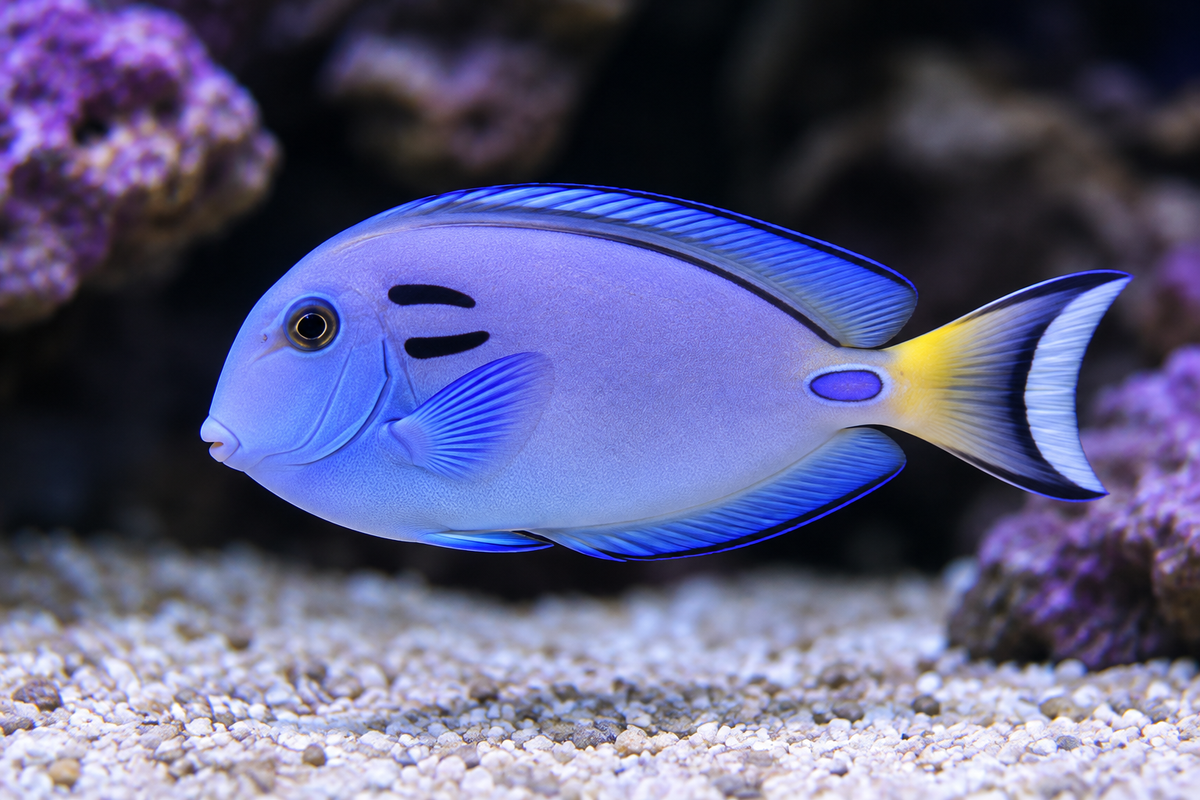
The Tennenti Tang is a beautiful and distinctive saltwater aquarium fish admired for its elegant body shape, unique shoulder markings, and active algae-grazing behavior. Also commonly known as the Lieutenant Tang or Lieutenant Surgeonfish, this impressive marine species is an excellent choice for experienced aquarium enthusiasts looking to add a fascinating and active centerpiece fish to a large saltwater aquarium.
Scientifically known as Acanthurus tennentii, the Tennenti Tang belongs to the family Acanthuridae and is native to tropical marine environments throughout the Indian Ocean and portions of the western Indo-Pacific region.
One of the most recognizable characteristics of the Tennenti Tang is its distinctive dark shoulder markings located behind the head and above the pectoral fins.
These markings resemble military insignia, contributing to its common name, Lieutenant Tang.
Juvenile Tennenti Tangs often display beautiful yellow coloration with dark markings near the shoulders.
As the fish matures, its coloration gradually transforms into shades of gray, olive, brown, or bluish-gray, while the distinctive shoulder markings become more prominent.
Adult specimens may also display attractive blue highlights along the fins and tail.
This remarkable transformation makes the Tennenti Tang particularly interesting for aquarium enthusiasts who enjoy observing the natural development of marine fish.
Tennenti Tangs are active swimmers that naturally inhabit coral reefs, rocky reef slopes, and algae-rich marine environments.
They spend much of their time exploring reef structures while grazing on algae and searching for food.
Their natural grazing behavior makes them desirable additions to established marine aquariums, where they may help reduce certain types of algae growth.
Although Tennenti Tangs can contribute to aquarium algae management, they should not be considered a guaranteed solution for every type of nuisance algae.
In captivity, they require a varied diet rich in marine algae, vegetable matter, and high-quality herbivore foods.
Tennenti Tangs are generally compatible with many appropriately sized marine fish but may become territorial toward other tangs, especially similarly shaped surgeonfish.
Their active swimming behavior and substantial adult size require a spacious aquarium with excellent water quality and adequate horizontal swimming room.
Tennenti Tangs can reach approximately 12 inches in length, with some individuals growing larger under favorable conditions.
A minimum aquarium size of 180 gallons is recommended for long-term care, with 240 gallons or larger preferred for mature specimens.
Tennenti Tangs are considered reef safe because they do not normally consume coral tissue or intentionally damage healthy ornamental invertebrates.
With its distinctive shoulder markings, impressive adult coloration, and active grazing behavior, the Tennenti Tang is an outstanding addition to a properly maintained large saltwater aquarium.
Product Specifications
Scientific Name: Acanthurus tennentii
Common Name: Tennenti Tang, Lieutenant Tang, Lieutenant Surgeonfish
Family: Acanthuridae
Fish Type: Marine Surgeonfish / Tang
Care Level: Moderate to Advanced
Temperament: Semi-Aggressive; May Be Territorial Toward Other Tangs
Diet: Primarily Herbivore
Adult Size: Approximately 12 Inches; Larger Specimens Are Possible
Minimum Tank Size: 180 Gallons
Recommended Tank Size: 240 Gallons or Larger
Temperature: 74–80°F (23–27°C)
Recommended pH: 8.1–8.4
Specific Gravity: 1.023–1.026
Salinity: Approximately 35 ppt
Water Flow: Moderate to Strong
Water Conditions: Clean, Stable, Well-Oxygenated Saltwater
Recommended Setup: Large Established Reef Aquarium or Fish-Only Marine Aquarium with Live Rock
Swimming Level: Middle Water Column; Active Open-Water Swimmer
Compatibility: Appropriately Sized Peaceful to Moderately Assertive Marine Fish
Reef Compatibility: Reef Safe
Coral Compatibility: Excellent
Shrimp Compatibility: Generally Compatible with Established Ornamental Shrimp
Algae Control: Grazes on Various Marine Algae and Algae Films
Juvenile Coloration: Yellow to Yellowish-Brown with Dark Shoulder Markings
Adult Coloration: Gray, Olive, Brown, or Bluish-Gray with Contrasting Shoulder Markings
Origin: Indian Ocean and Western Indo-Pacific
Breeding: Pelagic Spawner; Captive Breeding Is Challenging
Lifespan: Potentially 10–20 Years with Excellent Care
Recommended Experience: Intermediate to Advanced Saltwater Aquarists
Key Features
-
Distinctive dark shoulder markings resembling military insignia
-
Beautiful yellow juvenile coloration
-
Fascinating transformation into gray and bluish adult coloration
-
Elegant, streamlined surgeonfish body shape
-
Attractive blue highlights on mature specimens
-
Natural marine algae-grazing behavior
-
May help reduce certain nuisance algae populations
-
Active swimming and foraging behavior
-
Excellent centerpiece fish for large marine aquariums
-
Reef safe with corals and most ornamental invertebrates
-
Fascinating natural feeding and swimming behavior
-
Readily accepts high-quality marine herbivore foods
-
Unique appearance compared to more commonly available tang species
Aquarium Setup and Care Requirements
Aquarium Size: Provide a minimum 180-gallon aquarium for a Tennenti Tang. A 240-gallon or larger aquarium with extensive horizontal swimming space is preferred for mature specimens.
Aquascaping: Include substantial live rock, caves, sheltered resting areas, and large open swimming areas. Tennenti Tangs are active swimmers that require room to move comfortably throughout the aquarium.
Substrate: Aragonite sand or other appropriate marine aquarium substrates are suitable.
Live Rock: Established live rock is highly beneficial because it provides natural algae-grazing surfaces, shelter, and biological filtration.
Lighting: Standard marine aquarium lighting is suitable. Quality reef lighting enhances the fish's coloration and may support natural algae growth on rock surfaces.
Filtration: Use efficient biological and mechanical filtration, along with appropriate protein skimming, to maintain excellent water quality.
Water Movement: Moderate to strong circulation is recommended to provide well-oxygenated water and encourage natural swimming behavior.
Diet: Feed a varied herbivorous diet containing dried marine algae, spirulina-based foods, premium marine herbivore pellets, and other nutritionally balanced marine foods.
Tankmates: Suitable companions may include Clownfish, Wrasses, Gobies, Blennies, Rabbitfish, Angelfish, and other appropriately sized marine community fish.
Water Chemistry: Maintain stable salinity, temperature, pH, and alkalinity.
Water Quality: Perform regular partial water changes and maintain ammonia and nitrite at zero.
Territory: Provide sufficient swimming room and multiple hiding places to reduce competition with other grazing fish.
Long-Term Care: Maintain stable water conditions, consistent feeding, excellent oxygenation, and adequate swimming space.
Feeding and Nutrition
Tennenti Tangs are primarily herbivorous marine fish that naturally consume algae and other plant-based food sources.
In captivity, they require a varied and nutritionally balanced diet containing substantial marine algae and vegetable matter.
Recommended foods include:
-
Dried marine algae sheets
-
Nori seaweed
-
Premium marine herbivore pellets
-
Spirulina-based marine flakes
-
Frozen herbivore preparations
-
Algae-based marine foods
-
Suitable marine macroalgae
-
Frozen mysis shrimp as a supplemental food
-
Enriched frozen brine shrimp
-
Nutritionally balanced marine omnivore foods
-
Other appropriate marine aquarium foods
A diet rich in marine algae helps support healthy digestion, immune function, coloration, and long-term vitality.
Offer algae-based foods daily, with multiple feeding opportunities when practical.
Dried marine algae can be attached to a feeding clip to encourage natural grazing behavior.
Tennenti Tangs frequently spend much of the day searching for algae on live rock and aquarium surfaces.
Although they naturally consume algae, aquarium grazing alone should not be considered a complete diet.
Consistent supplemental feeding is essential to maintain proper body condition and prevent nutritional deficiencies.
Newly introduced Tennenti Tangs may initially be hesitant to accept prepared foods.
Offering dried marine algae and high-quality frozen foods may help encourage feeding during acclimation.
Avoid overfeeding, as uneaten food can contribute to nutrient buildup and poor water quality.
Distinctive Lieutenant Shoulder Markings
One of the most fascinating characteristics of the Tennenti Tang is its distinctive dark shoulder markings.
These markings are located behind the head, near the upper portion of the body.
Their appearance resembles military insignia, contributing to the species' common name, Lieutenant Tang.
The markings may appear as dark horizontal bars or elongated patches.
As the fish matures, these distinctive markings often become more pronounced against its changing body coloration.
The contrast between the shoulder markings and the surrounding body creates a unique appearance that distinguishes the Tennenti Tang from many other surgeonfish.
These markings make the species particularly recognizable and attractive in large marine aquarium displays.
Juvenile and Adult Color Transformation
Tennenti Tangs undergo noticeable changes in coloration as they mature.
Juvenile Coloration: Young specimens may display bright yellow or yellowish-brown coloration with distinctive dark shoulder markings.
Their juvenile appearance can be quite different from that of mature specimens.
Transitional Coloration: As the fish grows, its bright juvenile coloration gradually transitions into shades of olive, gray, or brown.
During this stage, the fish may display a mixture of juvenile and adult coloration.
Adult Coloration: Mature Tennenti Tangs typically develop gray, olive-brown, or bluish-gray body coloration.
The distinctive shoulder markings remain an important identifying characteristic.
Adult specimens may also display beautiful blue highlights along the fins and tail.
Individual coloration may vary depending on age, genetics, lighting, diet, stress levels, and overall health.
Natural Algae-Grazing Benefits
One of the most desirable characteristics of the Tennenti Tang is its natural algae-grazing behavior.
In tropical marine environments, Tennenti Tangs spend considerable time grazing on algae growing throughout coral reefs and rocky structures.
In home aquariums, they may consume algae growing along live rock, aquarium decorations, and other surfaces.
This behavior can provide a useful contribution to overall aquarium algae management.
Tennenti Tangs may graze on various types of marine algae, including certain filamentous algae and algae films.
However, individual feeding preferences vary significantly.
Not every Tennenti Tang will consume every type of nuisance algae.
Their natural grazing habits should be viewed as a beneficial contribution to aquarium maintenance rather than a complete algae-control solution.
For best results, combine appropriate herbivorous livestock with responsible nutrient management, regular maintenance, and stable water conditions.
Temperament and Compatibility
Tennenti Tangs are generally compatible with many unrelated marine fish but may become territorial toward other surgeonfish.
Their behavior can become more assertive as they mature and establish a preferred grazing territory.
Aggression is most likely toward similarly shaped tangs or species competing for the same food sources.
Particular caution should be exercised when housing Tennenti Tangs with other members of the Acanthurus genus.
For most home aquariums, maintaining a single Tennenti Tang is recommended.
Multiple tang species may sometimes coexist in very large aquariums with sufficient swimming room, hiding places, and carefully planned stocking.
However, compatibility cannot be guaranteed.
Suitable companions may include Clownfish, Wrasses, Gobies, Blennies, Rabbitfish, Angelfish, and other appropriately sized marine community fish.
Avoid overcrowding and monitor interactions carefully when introducing new tangs.
Providing substantial live rock and open swimming space helps reduce stress and territorial disputes.
Reef Compatibility
Tennenti Tangs are considered reef-safe marine fish.
They do not normally consume coral tissue or intentionally damage healthy coral colonies.
They may coexist successfully with soft corals, large-polyp stony corals, small-polyp stony corals, and other reef aquarium inhabitants.
Their natural grazing behavior can be beneficial in reef systems because they frequently consume algae growing on exposed surfaces.
Tennenti Tangs are also generally compatible with established ornamental shrimp, snails, hermit crabs, and other peaceful marine invertebrates.
Their active swimming behavior adds natural movement throughout the aquarium.
Although they are considered reef safe, proper feeding and stable water conditions remain essential.
Because Tennenti Tangs can grow quite large, adequate aquarium space is especially important to prevent overcrowding and stress.
With sufficient swimming space and appropriate tankmates, Tennenti Tangs can make excellent additions to large established reef aquariums.
Natural Habitat and Behavior
Tennenti Tangs naturally inhabit tropical marine environments throughout the Indian Ocean and western Indo-Pacific region.
They are commonly associated with coral reefs, rocky reef slopes, and areas containing established algae growth.
In these environments, they spend much of their time swimming between reef structures while grazing on available food sources.
Their streamlined bodies allow them to move efficiently through reef environments.
In home aquariums, Tennenti Tangs frequently establish daily grazing routines.
They may move from one rock formation to another while searching for food.
When startled, they often retreat into nearby caves or sheltered areas.
Their active swimming behavior and distinctive shoulder markings make them especially attractive additions to larger marine displays.
Health and Acclimation Considerations
Tennenti Tangs require careful attention during transportation, acclimation, and introduction into a new aquarium.
Like other surgeonfish, they can be susceptible to external parasites, including marine ich.
Stress associated with poor water quality, aggressive tankmates, inadequate swimming space, or inconsistent feeding may increase their vulnerability to health problems.
A mature aquarium with stable water chemistry and excellent oxygenation is strongly recommended.
New specimens should be carefully observed for normal breathing, active swimming, healthy body condition, and consistent feeding.
An appropriate quarantine and disease-prevention process is recommended before introducing new livestock into an established display aquarium.
Maintaining a varied diet rich in marine algae and minimizing environmental stress can help support long-term health.
Because Tennenti Tangs grow large and require substantial swimming space, aquarists should plan for their full adult size before purchasing.
Breeding Information
Tennenti Tangs are egg-laying marine fish that reproduce through spawning.
Like other surgeonfish, they release eggs into the water column during reproductive activity.
The eggs and developing larvae undergo a planktonic stage.
Successfully breeding Tennenti Tangs in captivity is challenging because larvae require specialized foods, carefully controlled water conditions, and advanced marine aquaculture techniques.
Captive breeding of this species is uncommon in typical home aquariums.
A dedicated marine breeding and larval-rearing system is generally necessary for successful propagation.
Special Care Considerations
-
Maintain stable, fully cycled saltwater conditions.
-
Provide a very large aquarium suitable for the fish's adult size.
-
Include substantial live rock and natural grazing surfaces.
-
Provide extensive open swimming space.
-
Offer a varied diet rich in marine algae and vegetable matter.
-
Provide dried marine algae or nori daily.
-
Do not rely exclusively on naturally occurring aquarium algae.
-
Maintain stable salinity and temperature.
-
Avoid sudden changes in water chemistry.
-
Provide strong filtration and excellent oxygenation.
-
Monitor territorial behavior toward other tangs.
-
Exercise particular caution with other Acanthurus species.
-
Avoid overcrowding and aggressive tankmates.
-
Maintain excellent filtration and regular aquarium maintenance.
-
Use careful acclimation when introducing new specimens.
-
Follow appropriate quarantine and disease-prevention practices.
-
Observe the fish for signs of marine ich and other common surgeonfish health concerns.
-
Exercise caution around the sharp defensive spine near the tail.
-
Maintain a secure aquarium cover.
-
Monitor feeding behavior and body condition during acclimation.
-
Plan for the species' substantial adult size and long-term aquarium requirements.
Why Choose the Tennenti Tang?
The Tennenti Tang is a beautiful and distinctive marine fish that combines unique shoulder markings, impressive adult coloration, and beneficial natural algae-grazing behavior.
Its fascinating juvenile-to-adult color transformation makes it especially interesting for aquarium enthusiasts who enjoy observing the natural development of marine fish.
Unlike many ornamental marine fish, the Tennenti Tang may also contribute to aquarium maintenance by grazing on various types of marine algae.
Its active swimming behavior and constant foraging provide natural movement throughout the aquarium.
The Tennenti Tang is especially appealing to experienced aquarium enthusiasts looking for a large, distinctive surgeonfish with unusual markings and fascinating natural behavior.
Its reef-safe feeding habits make it suitable for many appropriately stocked large reef aquariums.
Whether you're building a spacious fish-only marine aquarium, expanding an established reef display, or looking for a unique centerpiece tang with distinctive markings, the Tennenti Tang offers beauty, activity, and personality.
If you're searching for an impressive saltwater fish with distinctive shoulder markings, beautiful coloration, and natural algae-grazing behavior, the Tennenti Tang is an outstanding choice.
Note: This listing refers to the Tennenti Tang, Acanthurus tennentii, also known as the Lieutenant Tang or Lieutenant Surgeonfish. Individual size, coloration, temperament, and algae-feeding preferences may vary. Tennenti Tangs can grow to approximately 12 inches or larger and require a spacious aquarium with extensive swimming room. Although generally reef safe, they may become territorial toward other surgeonfish, particularly similarly shaped Acanthurus species. This species possesses a sharp defensive spine near the tail and should be handled carefully. Photographs may be representative unless the fish is specifically listed as WYSIWYG (What You See Is What You Get).
Share
Shop More
-
Freshwater Aquarium Fish
Fish ship out on Mondays and Tuesdays to ensure their safety during their...
-
Live Aquatic Plants
Plants ship out on Mondays and Tuesdays to ensure their safety during their...
-
Fish Tank Supplies
All orders are shipped out on Mondays and Tuesdays. Find everything you...
-
Aquariums & Stands
Looking to upgrade your setup? Visit Natural Environment Aquatix in Jacksonville, FL...
