
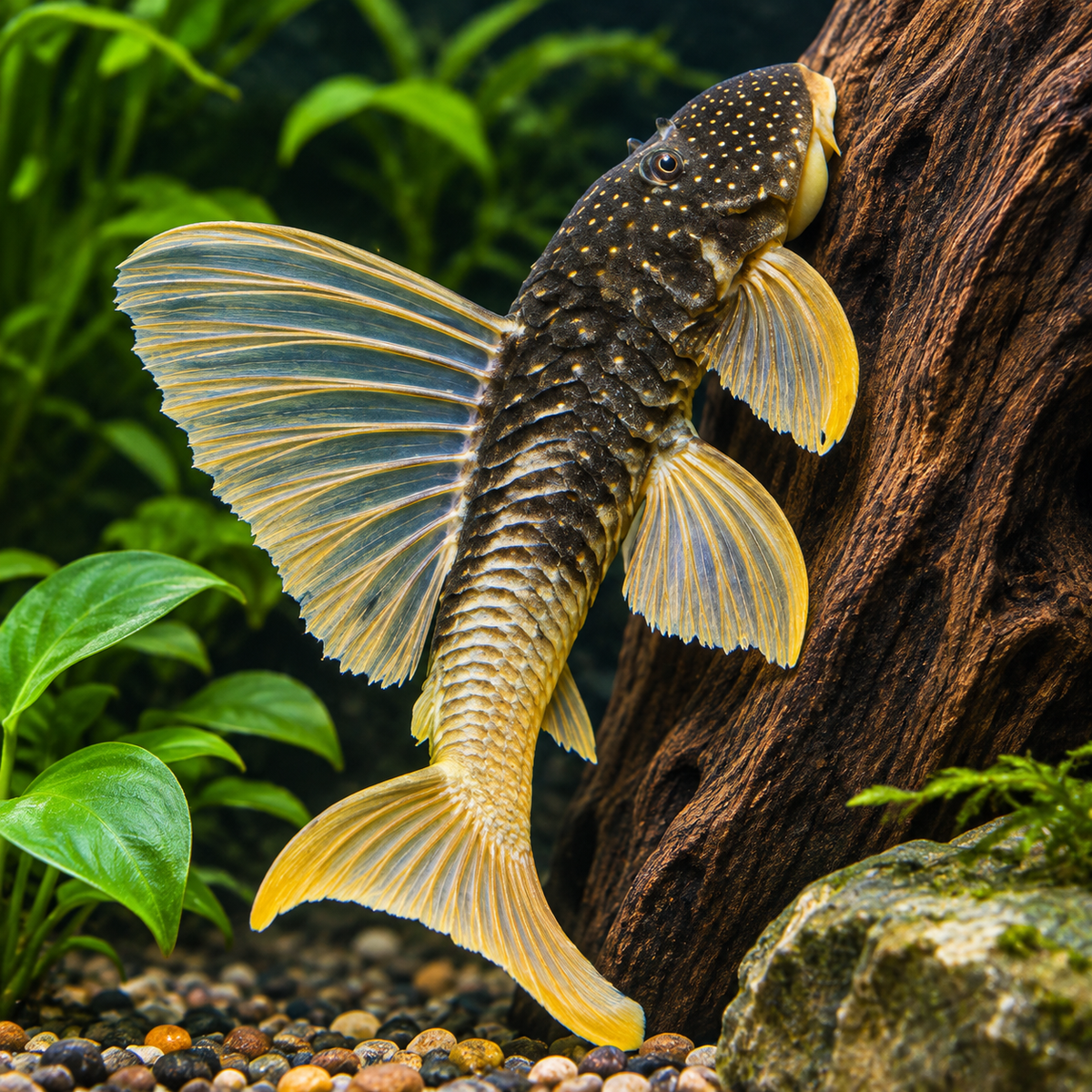
Sailfin Luteus Pleco
Sailfin Luteus Pleco
Couldn't load pickup availability
Sailfin Luteus Pleco (Baryancistrus xanthellus / Luteus-Type Pleco) – Rare Ornamental Freshwater Plecostomus
The Sailfin Luteus Pleco is a striking ornamental freshwater catfish admired for its impressive dorsal fin, distinctive coloration, and fascinating bottom-dwelling behavior. Highly desirable among plecostomus enthusiasts, this specialty pleco brings a unique combination of beauty, personality, and natural algae-grazing behavior to large freshwater aquariums.
The name Sailfin Luteus Pleco is used in the aquarium trade for specialty plecos associated with prominent dorsal fins and yellow or golden coloration. Because commercial names can vary between importers, the exact scientific identification should be confirmed with the supplier. True Luteus Plecos are generally associated with Baryancistrus xanthellus or other Luteus-type loricariids, while some sailfin varieties belong to different genera.
One of the most attractive characteristics of the Sailfin Luteus Pleco is its broad body, armored appearance, and beautifully developed dorsal fin. When extended, the dorsal fin creates an impressive sail-like profile that makes the fish stand out against natural driftwood and rock formations.
Depending on the individual variety, these fish may display shades of dark brown, olive, golden yellow, or contrasting yellow markings. Coloration can vary significantly with age, genetics, and the particular species or collection locality.
Like other loricariid catfish, the Sailfin Luteus Pleco possesses a specialized sucker-shaped mouth used for grazing across submerged surfaces. This adaptation allows the fish to explore rocks, driftwood, and other aquarium structures while searching for algae, biofilm, and naturally occurring food particles.
Sailfin Luteus Plecos are primarily bottom-dwelling fish that spend much of their time exploring the aquarium substrate, resting beneath driftwood, and occupying sheltered areas. Although they may initially appear shy, established specimens often become more visible during feeding and periods of reduced lighting.
These plecos are generally peaceful toward unrelated fish but may display territorial behavior toward other bottom-dwelling catfish, particularly when competing for caves, feeding areas, or preferred resting locations.
A spacious aquarium with excellent filtration and abundant oxygen is essential for maintaining healthy Sailfin Luteus Plecos. Depending on the exact species and adult size, a minimum aquarium of approximately 75–125 gallons or larger may be required. Larger aquariums are preferred for mature specimens and community setups.
The ideal aquarium should contain smooth rocks, natural driftwood, sturdy caves, and open areas for grazing. Strong biological filtration and consistent water circulation help create the clean, oxygen-rich environment preferred by many river-dwelling plecos.
Although plecos are frequently described as algae eaters, they should never be expected to survive on aquarium algae alone. A balanced diet should include high-quality sinking pleco foods, vegetable-based wafers, appropriate fresh vegetables, and supplemental protein depending on the species.
Because Luteus-type plecos may have specialized dietary and environmental requirements, careful identification is particularly important when selecting foods and establishing aquarium conditions.
With its impressive dorsal fin, attractive coloration, and fascinating behavior, the Sailfin Luteus Pleco is an exceptional choice for experienced freshwater aquarists seeking a distinctive ornamental bottom-dwelling fish.
Product Specifications
Scientific Name: Species Identification Requires Confirmation; Luteus-Type Plecos May Be Associated with Baryancistrus or Other Loricariid Genera
Common Name: Sailfin Luteus Pleco, Luteus Sailfin Plecostomus
Family: Loricariidae
Fish Type: Armored Freshwater Catfish
Care Level: Moderate to Advanced
Temperament: Generally Peaceful; May Be Territorial Toward Other Plecos
Diet: Omnivorous Grazer; Exact Dietary Requirements Depend on Species
Adult Size: Species Dependent; Potentially 8–16 Inches or Larger
Minimum Tank Size: Approximately 75–125 Gallons or Larger, Depending on Confirmed Species
Temperature: Approximately 76–84°F (24–29°C), Species Dependent
Recommended pH: Approximately 6.0–7.5, Species Dependent
Water Hardness: Soft to Moderately Hard
Water Flow: Moderate to Strong
Water Conditions: Clean, Highly Oxygenated Freshwater
Recommended Setup: Spacious Aquarium with Driftwood, Rocks, Caves, and Strong Filtration
Swimming Level: Bottom
Compatibility: Peaceful to Moderately Assertive Community Fish of Appropriate Size
Plant Compatibility: Generally Suitable for Established Planted Aquariums, Depending on Species and Feeding
Origin: South American Loricariid Lineages; Exact Collection Region Depends on Species
Breeding: Cave Spawning in Many Related Loricariid Species
Lifespan: Approximately 10–15 Years or Longer, Depending on Species and Care
Recommended Experience: Intermediate to Advanced Plecostomus Keepers
Key Features
-
Impressive sail-like dorsal fin
-
Attractive ornamental coloration
-
Distinctive armored body and sucker-shaped mouth
-
Fascinating bottom-dwelling behavior
-
Excellent addition to large freshwater aquariums
-
Naturally explores driftwood, rocks, and submerged surfaces
-
Provides interesting movement throughout the lower aquarium
-
May develop recognizable feeding routines
-
Benefits from caves and natural shelter
-
Highly desirable among specialty plecostomus collectors
-
Long-lived aquarium catfish when properly maintained
Aquarium Setup and Care Requirements
Aquarium Size: Provide a spacious aquarium appropriate for the confirmed species and expected adult size. Large adult plecos require substantial bottom space and efficient filtration.
Aquascaping: Include natural driftwood, smooth rocks, and sturdy caves. Create multiple sheltered areas while leaving adequate space for movement and grazing.
Substrate: Fine sand or smooth gravel is recommended to reduce the risk of injury to the fish's underside and mouth.
Lighting: Moderate to subdued lighting is suitable. Provide shaded areas and hiding places to encourage natural behavior.
Filtration: Use powerful biological and mechanical filtration to maintain excellent water quality. Many specialty plecos benefit from strong oxygenation and consistent circulation.
Diet: Offer premium sinking pleco pellets and wafers supplemented with appropriate vegetables and protein-rich foods according to the confirmed species' nutritional requirements.
Tankmates: Suitable companions may include peaceful tetras, rainbowfish, appropriately sized cichlids, and other fish that do not compete aggressively for bottom territory.
Water Quality: Maintain stable water parameters and perform regular partial water changes. Ammonia and nitrite should remain at zero.
Territory: Provide multiple caves and feeding areas if housing more than one pleco. Monitor territorial interactions carefully.
Long-Term Care: Plan for the fish's adult size, specialized feeding requirements, and long lifespan.
Feeding and Nutrition
The Sailfin Luteus Pleco requires a varied and nutritious diet to maintain healthy growth and overall condition.
High-quality sinking pleco pellets should form the foundation of the feeding routine. Depending on the confirmed species, suitable supplemental foods may include:
-
Premium algae wafers and sinking catfish pellets
-
Blanched zucchini and other appropriate vegetables
-
Spirulina-based prepared foods
-
Frozen bloodworms or mysis shrimp in appropriate amounts
-
Specialty pleco foods formulated for omnivorous grazing species
Natural driftwood and rock surfaces provide additional grazing opportunities by supporting biofilm and microorganisms.
Not all plecos are primarily herbivorous, and some species require substantial protein in their diet. Feeding should therefore be adjusted according to accurate species identification.
Temperament and Compatibility
Sailfin Luteus Plecos are generally peaceful toward fish occupying the middle and upper levels of the aquarium.
However, territorial behavior may occur when multiple plecos compete for caves, driftwood, or feeding areas.
Larger specimens may become increasingly protective of their preferred hiding places.
Providing adequate bottom space, multiple shelters, and separate feeding locations can help reduce aggression.
Avoid overcrowding the aquarium with large bottom-dwelling fish, and monitor compatibility with other plecostomus species.
Special Care Considerations
-
Confirm the exact species before selecting long-term aquarium conditions.
-
Provide a spacious aquarium with substantial bottom area.
-
Maintain excellent water quality and strong oxygenation.
-
Include caves, driftwood, and smooth rock formations.
-
Feed a balanced diet appropriate for the species.
-
Do not rely exclusively on naturally occurring aquarium algae.
-
Monitor territorial behavior when housing multiple plecos.
-
Avoid sharp decorations that may damage the fish's underside.
-
Maintain stable temperatures and water chemistry.
-
Plan for long-term growth and specialized care requirements.
Why Choose the Sailfin Luteus Pleco?
The Sailfin Luteus Pleco is an impressive ornamental freshwater catfish that combines distinctive physical features, fascinating behavior, and beautiful coloration.
Its prominent dorsal fin and armored body create a striking appearance, while its natural grazing behavior adds activity and interest to the lower areas of the aquarium.
For aquarists who appreciate unique plecostomus varieties, this fish offers an opportunity to maintain a distinctive specialty catfish in a properly designed freshwater environment.
Whether you're creating a large South American-inspired aquarium or expanding an established collection of ornamental plecos, the Sailfin Luteus Pleco can provide an engaging and visually impressive addition.
Important Note: "Sailfin Luteus Pleco" is not a universally standardized scientific or commercial name. The description above is intentionally generalized because the exact species cannot be reliably established from the trade name alone. In particular, the true Golden Luteus Pleco is commonly identified as L014, Scobinancistrus aureatus, while Baryancistrus xanthellus is generally associated with L018, L081, and L177 Gold Nugget Plecos. Scientific identification, adult size, diet, and water requirements should be verified before publishing species-specific claims. Individual coloration, fin development, and markings may vary. Photographs may be representative unless specifically listed as WYSIWYG (What You See Is What You Get).
Share
Shop More
-
Freshwater Aquarium Fish
Fish ship out on Mondays and Tuesdays to ensure their safety during their...
-
Live Aquatic Plants
Plants ship out on Mondays and Tuesdays to ensure their safety during their...
-
Fish Tank Supplies
All orders are shipped out on Mondays and Tuesdays. Find everything you...
-
Aquariums & Stands
Looking to upgrade your setup? Visit Natural Environment Aquatix in Jacksonville, FL...
