
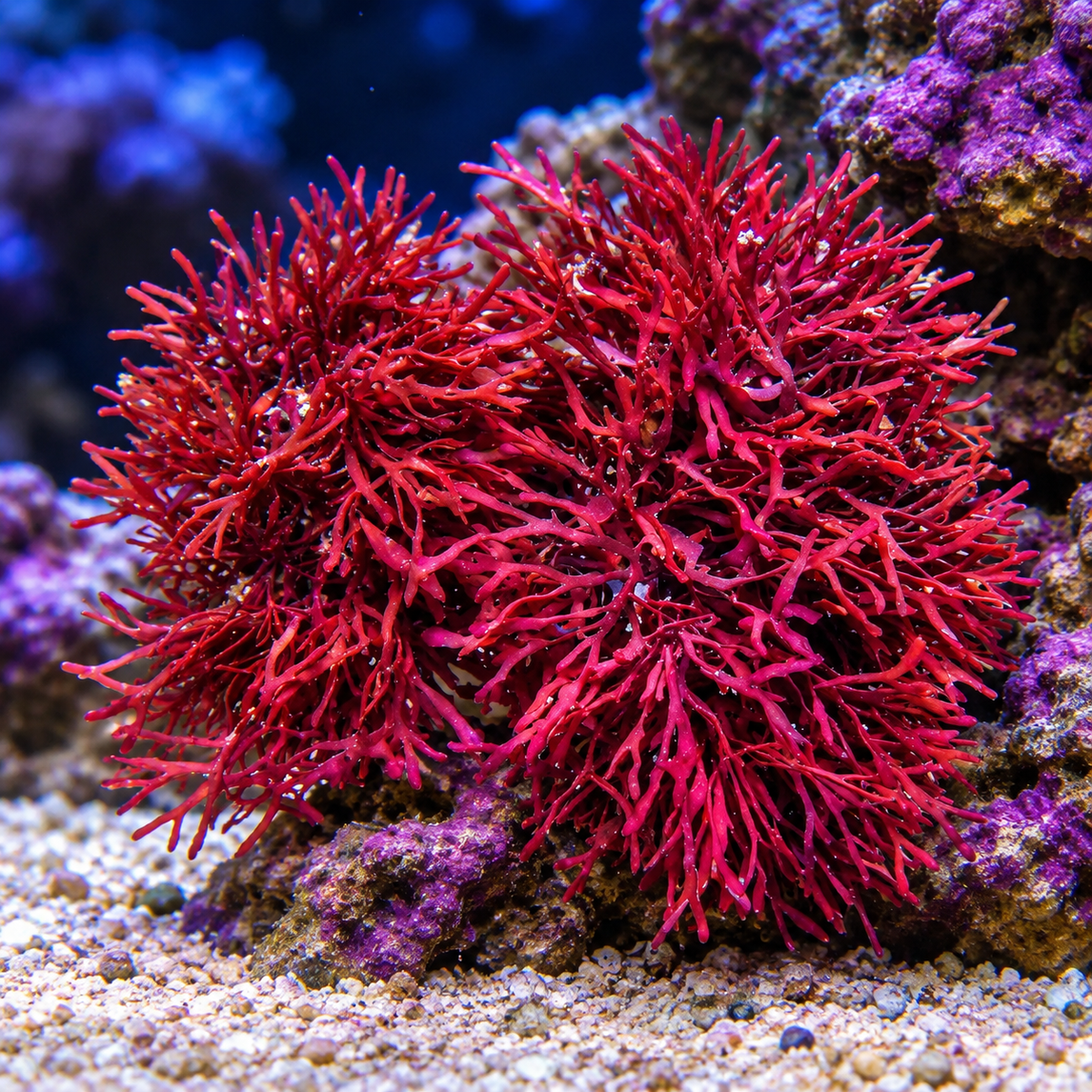
Pom Pom Gracilaria Macroalgae
Pom Pom Gracilaria Macroalgae
Couldn't load pickup availability
Pom Pom Gracilaria Macroalgae – Beautiful Red Ornamental Macroalgae for Saltwater Reef Aquariums
Pom Pom Gracilaria Macroalgae is a beautiful and highly desirable ornamental marine algae known for its vibrant red coloration, delicate branching structure, and distinctive pom-pom-like growth pattern. This attractive saltwater macroalgae is an excellent choice for aquarium enthusiasts looking to add natural color, texture, and biological diversity to their reef aquarium.
Belonging to the red algae group, Pom Pom Gracilaria is commonly sold as an ornamental variety of Gracilaria. The exact scientific species may vary between suppliers, making proper identification important when determining specific growth requirements.
One of the most recognizable characteristics of Pom Pom Gracilaria Macroalgae is its dense, rounded growth pattern, which resembles miniature underwater pom-poms or colorful marine bushes.
Its branching structure may display beautiful shades of red, burgundy, pink, or reddish-purple, creating an attractive contrast against green macroalgae, colorful corals, and natural live rock.
Unlike artificial aquarium decorations, Pom Pom Gracilaria is a living marine organism that utilizes light and dissolved nutrients to support growth.
As it grows, it absorbs available nutrients, including nitrate and phosphate, incorporating them into new algal tissue.
This natural process can contribute to nutrient management when healthy growth is periodically harvested and removed from the aquarium.
Pom Pom Gracilaria is particularly appealing for ornamental macroalgae gardens, established reef aquariums, refugiums, and marine planted displays.
Its distinctive growth structure provides additional habitat for small marine organisms, including copepods and amphipods.
Many aquarium enthusiasts also appreciate Gracilaria varieties because they may serve as a supplemental natural food source for certain herbivorous marine fish.
However, fish such as Tangs and Rabbitfish may consume ornamental Gracilaria rapidly, making tankmate selection important when the goal is to maintain it as a decorative feature.
Pom Pom Gracilaria generally performs best in established marine aquariums with stable water parameters, appropriate lighting, moderate water circulation, and sufficient nutrient availability.
With its beautiful red coloration, unique pom-pom appearance, and natural biological benefits, Pom Pom Gracilaria Macroalgae is an outstanding addition to properly maintained saltwater aquariums.
Product Specifications
Common Name: Pom Pom Gracilaria Macroalgae, Red Pom Pom Macroalgae, Ornamental Red Gracilaria
Scientific Name: Gracilaria sp. (Exact Species Requires Supplier Confirmation)
Organism Type: Marine Red Macroalgae
Classification: Rhodophyta
Care Level: Easy to Moderate
Coloration: Red, Burgundy, Pinkish-Red, or Reddish-Purple
Growth Form: Dense, Branching, Pom-Pom-Like Clusters
Growth Rate: Moderate Under Suitable Conditions; Varies by Species
Maximum Size: Variable; Can Be Managed Through Trimming
Minimum Tank Size: 10 Gallons
Recommended Tank Size: Suitable for Established Nano and Larger Marine Aquariums
Temperature: 72–78°F (22–26°C)
Recommended pH: 8.1–8.4
Specific Gravity: 1.023–1.026
Salinity: Approximately 35 ppt
Lighting: Moderate to High, Depending on Species and Acclimation
Water Flow: Moderate
Nutrient Requirements: Available Nitrate, Phosphate, and Essential Trace Elements
Placement: Live Rock, Rubble, Macroalgae Garden, or Refugium
Recommended Setup: Established Reef Aquarium, Marine Macroalgae Display, or Refugium
Coral Compatibility: Generally Reef Safe
Fish Compatibility: Best with Fish That Do Not Heavily Graze on Macroalgae
Invertebrate Compatibility: Generally Compatible with Reef-Safe Invertebrates
Propagation: Fragmentation and Division of Healthy Growth
Origin: Marine Environments; Specific Geographic Origin Varies by Species
Recommended Experience: Beginner to Intermediate Saltwater Aquarists
Key Features
-
Beautiful red and burgundy coloration
-
Unique rounded pom-pom growth pattern
-
Attractive branching structure
-
Excellent ornamental macroalgae for reef aquariums
-
Adds natural color and texture to marine displays
-
May contribute to nitrate and phosphate uptake
-
Provides additional habitat for beneficial microfauna
-
Excellent addition to ornamental macroalgae gardens
-
Can complement green and purple macroalgae varieties
-
Suitable for many established saltwater aquariums
-
May be used in certain refugium applications
-
Can be propagated through careful trimming
-
May serve as supplemental food for some herbivorous marine fish
-
Creates a beautiful natural underwater garden appearance
Aquarium Setup and Care Requirements
Aquarium Size: Pom Pom Gracilaria Macroalgae can be maintained in established nano reef aquariums and larger marine systems. A minimum aquarium size of 10 gallons is generally suitable when appropriate lighting and water conditions are provided.
Aquascaping: Position the macroalgae where it receives sufficient light and water circulation. It may be displayed among live rock, secured to rubble, or maintained in a dedicated macroalgae garden.
Substrate: Aragonite sand or other appropriate marine aquarium substrates are suitable. Pom Pom Gracilaria does not require a nutrient-rich planted aquarium substrate.
Live Rock: Established live rock provides natural attachment opportunities, biological filtration, and habitat for small marine organisms.
Lighting: Moderate lighting is a useful starting point. Some Gracilaria varieties tolerate stronger lighting when properly acclimated and supplied with sufficient nutrients.
Water Flow: Moderate circulation helps deliver nutrients, prevent debris accumulation, and support healthy growth.
Filtration: Maintain efficient biological filtration while avoiding excessively nutrient-depleted conditions.
Nutrients: Provide sufficient nitrate and phosphate to support healthy photosynthetic growth.
Trace Elements: Maintain balanced marine water chemistry. Trace elements may be important for growth, but supplementation should be guided by testing and actual aquarium requirements.
Tankmates: Choose fish and invertebrates that will not heavily consume or damage ornamental macroalgae.
Water Chemistry: Maintain stable salinity, temperature, pH, and alkalinity.
Maintenance: Remove accumulated debris, trim excess growth, and inspect regularly for signs of deterioration.
Lighting Requirements
Pom Pom Gracilaria Macroalgae requires appropriate lighting to support photosynthesis and maintain healthy growth.
Like other photosynthetic marine algae, it converts light energy into chemical energy used for growth and metabolism.
Moderate marine aquarium lighting is generally a suitable starting point.
Depending on the exact species, established specimens may also perform well under moderately strong lighting.
However, excessively intense lighting can cause stress, particularly when nutrient availability is limited.
New specimens should be gradually acclimated to the lighting conditions of the aquarium.
Avoid placing newly introduced macroalgae directly under extremely intense reef lighting without an appropriate acclimation period.
Signs of healthy lighting conditions may include consistent red coloration, firm branching structures, and continued growth.
Sudden paling, bleaching, or tissue deterioration may indicate environmental stress.
Because Pom Pom Gracilaria is a trade name rather than a confirmed species identification, exact lighting requirements may vary.
Nutrient Uptake and Water Quality Benefits
One of the most useful characteristics of Pom Pom Gracilaria Macroalgae is its ability to absorb dissolved nutrients from aquarium water.
As it grows, the algae utilizes nitrogen, phosphorus, and other essential nutrients.
Nitrate and phosphate are commonly available nutrient sources in marine aquariums.
These nutrients are incorporated into new algal tissue during growth.
When excess macroalgae is harvested and physically removed from the aquarium, some of the absorbed nutrients are exported from the system.
This process can contribute to a balanced nutrient-management strategy.
However, the effectiveness of nutrient export depends on the amount of macroalgae present, its growth rate, lighting, and available nutrients.
Pom Pom Gracilaria should not be considered a replacement for proper filtration, water changes, or responsible feeding.
Extremely low nutrient concentrations may limit growth and contribute to deterioration.
Maintaining balanced nutrient availability is generally more beneficial than attempting to eliminate all detectable nitrate and phosphate.
Beautiful Red Pom-Pom Coloration
Pom Pom Gracilaria is especially desirable because of its attractive red coloration and unusual growth structure.
Its branches may form compact, rounded clusters that resemble miniature pom-poms.
Depending on the variety and growing conditions, coloration may range from bright reddish-pink to deep burgundy or reddish-purple.
Its dense branching appearance creates a beautiful contrast against natural live rock and colorful reef aquarium decorations.
When combined with green macroalgae, Pom Pom Gracilaria can create a striking underwater garden display.
Its unusual shape makes it visually distinct from many commonly available marine macroalgae.
Color intensity may vary depending on species, lighting, nutrient availability, water chemistry, and overall health.
Stable environmental conditions help support healthy coloration and growth.
Placement in Reef Aquariums
Pom Pom Gracilaria Macroalgae can be used as an ornamental feature in established reef aquariums.
It may be positioned among rock structures or incorporated into a dedicated marine macroalgae garden.
For best results, choose a location with appropriate lighting and moderate water circulation.
Some Gracilaria varieties do not attach strongly to rockwork and may require temporary securing.
Small pieces of rubble, appropriate aquarium-safe holders, or other suitable methods may be used to keep the algae in position.
Avoid compressing or damaging delicate branches when securing the macroalgae.
Do not place Pom Pom Gracilaria directly against sensitive coral tissue.
Although it does not normally consume coral tissue, excessive growth may shade nearby colonies or compete for physical space.
Regular trimming helps maintain an attractive aquascape and prevents excessive spreading.
Compatibility with Marine Fish
Pom Pom Gracilaria Macroalgae is generally compatible with peaceful marine fish that do not actively consume ornamental algae.
Suitable companions may include:
-
Clownfish
-
Cardinalfish
-
Firefish
-
Small Gobies
-
Peaceful Blennies
-
Possum Wrasses
-
Fairy Wrasses
-
Other appropriately selected marine community fish
Herbivorous marine fish may graze on or consume Pom Pom Gracilaria.
Particular caution should be exercised with:
-
Tangs
-
Rabbitfish and Foxfaces
-
Certain Angelfish
-
Other active algae-grazing marine fish
Some Tangs and Rabbitfish readily consume Gracilaria varieties.
This may be desirable when Gracilaria is intentionally cultivated as supplemental food.
However, it can be problematic when the macroalgae is intended as a permanent ornamental display.
For decorative macroalgae gardens, select fish that are unlikely to consume the algae.
Natural Food Source for Herbivorous Fish
Certain Gracilaria species are cultivated as supplemental marine algae foods for herbivorous aquarium fish.
Tangs, Rabbitfish, and other algae-grazing species may consume suitable Gracilaria varieties.
When grown in a clean, fish-safe environment, appropriately identified Gracilaria may provide additional dietary variety.
However, acceptance varies by fish species and individual.
Not every ornamental Gracilaria variety is equally suitable or palatable.
Macroalgae intended for feeding should be free from harmful medications, contaminants, and unwanted organisms.
It should also be positively identified before being used as a food source.
Gracilaria should supplement, rather than replace, a balanced diet formulated for marine herbivores.
Reef and Coral Compatibility
Pom Pom Gracilaria Macroalgae is generally considered reef safe.
It does not normally feed on healthy coral tissue.
It may coexist with many common reef aquarium corals, including:
-
Zoanthids
-
Mushroom Corals
-
Soft Corals
-
Large-Polyp Stony Corals
-
Small-Polyp Stony Corals
However, macroalgae should be positioned carefully to prevent shading or physical contact with sensitive corals.
Dense growth may reduce water movement around nearby coral colonies.
Regular trimming and maintenance help prevent excessive growth.
Some herbivorous invertebrates may graze on the algae.
Compatibility should be evaluated according to the specific livestock present in the aquarium.
Macroalgae Garden Applications
Pom Pom Gracilaria is an excellent candidate for ornamental marine macroalgae gardens.
Macroalgae gardens emphasize the natural beauty of living marine algae and often feature several varieties with contrasting colors and growth patterns.
Pom Pom Gracilaria provides attractive red coloration and a distinctive rounded structure.
It may be combined with other compatible ornamental macroalgae varieties, including:
-
Dragon's Breath Macroalgae
-
Red Gracilaria
-
Green Codium
-
Halimeda
-
Other ornamental red and green marine macroalgae
Combining different colors and textures can create a beautiful underwater landscape.
Each macroalgae variety may have different lighting, nutrient, flow, and maintenance requirements.
Careful selection and regular trimming help maintain a balanced and attractive display.
Refugium Applications
Pom Pom Gracilaria may also be maintained in certain marine aquarium refugiums.
Refugiums are protected areas used to support biological diversity and, in some systems, assist with nutrient management.
Macroalgae can provide additional habitat for copepods, amphipods, and other small marine organisms.
Its branching structure may create sheltered spaces where microfauna can live and reproduce.
As the macroalgae grows, it incorporates dissolved nutrients into new tissue.
Periodic harvesting can remove a portion of those nutrients from the aquarium system.
However, Pom Pom Gracilaria may grow more slowly than commonly used nutrient-export macroalgae such as Chaetomorpha.
For this reason, it may be better suited for ornamental purposes or mixed macroalgae refugiums rather than systems requiring maximum nutrient export.
Actual performance depends on species, biomass, lighting, and nutrient availability.
Growth and Propagation
Pom Pom Gracilaria Macroalgae may be propagated through careful fragmentation or division of healthy growth.
Established clusters can sometimes be separated into smaller portions.
Each healthy portion may continue growing when provided with appropriate environmental conditions.
Use clean aquarium-safe tools when trimming or dividing macroalgae.
Avoid crushing or excessively damaging the branches.
New fragments may need to be secured until they establish a stable position.
Growth rate varies depending on the exact species, lighting intensity, water circulation, and nutrient availability.
Remove deteriorating or detached tissue before it decomposes in the aquarium.
Regular harvesting can help maintain the desired shape and size.
Signs of Healthy Pom Pom Gracilaria
Healthy Pom Pom Gracilaria should generally display vibrant coloration and an intact branching structure.
Potential signs of healthy growth include:
-
Consistent red or burgundy coloration
-
Firm and intact branches
-
Continued development of new growth
-
Minimal tissue deterioration
-
Limited accumulation of trapped debris
-
Stable appearance under appropriate aquarium conditions
Potential warning signs include:
-
Sudden bleaching or paling
-
Tissue becoming soft or translucent
-
Excessive fragmentation
-
Rapid deterioration
-
Significant accumulation of nuisance algae
-
Loss of coloration or structural integrity
These symptoms may indicate lighting stress, nutrient deficiencies, unstable water chemistry, grazing damage, or other environmental problems.
Careful observation and regular water testing can help identify potential causes.
Acclimation and Introduction
Pom Pom Gracilaria should be introduced into a stable, established saltwater aquarium.
Before placing it into the display, inspect the macroalgae for unwanted hitchhikers, nuisance algae, and deteriorating tissue.
Depending on its source, ornamental macroalgae may carry small crustaceans, worms, snails, or other marine organisms.
Some hitchhikers may be beneficial, while others may be undesirable.
An appropriate observation or quarantine process can help reduce the risk of introducing unwanted organisms.
Avoid exposing macroalgae to treatments that have not been confirmed safe for the specific species.
Gradually acclimate the algae to the aquarium's lighting and water conditions.
During the first several days, monitor coloration and tissue condition.
Temporary changes in appearance may occur while the macroalgae adjusts to its new environment.
Continued deterioration should prompt evaluation of lighting, nutrients, salinity, and water quality.
Special Care Considerations
-
Maintain stable, fully cycled saltwater conditions.
-
Provide appropriate marine aquarium lighting.
-
Gradually acclimate new specimens to stronger lighting.
-
Maintain adequate nitrate and phosphate availability.
-
Avoid excessively nutrient-depleted conditions.
-
Provide moderate water circulation.
-
Prevent debris from accumulating within dense branches.
-
Maintain stable salinity and temperature.
-
Avoid sudden changes in water chemistry.
-
Monitor nutrient concentrations through regular testing.
-
Choose fish that will not heavily consume ornamental macroalgae.
-
Use caution with Tangs, Rabbitfish, and other herbivorous fish.
-
Avoid placing macroalgae directly against sensitive coral tissue.
-
Trim carefully when necessary.
-
Remove detached or deteriorating material.
-
Prevent excessive growth from shading nearby corals.
-
Inspect new macroalgae for unwanted hitchhikers.
-
Consider an appropriate quarantine or observation process.
-
Avoid copper-based medications and other treatments that may harm marine algae or invertebrates.
-
Maintain regular aquarium maintenance and water testing.
-
Confirm the exact scientific species when precise care requirements are needed.
Why Choose Pom Pom Gracilaria Macroalgae?
Pom Pom Gracilaria Macroalgae is a beautiful and versatile marine algae that combines vibrant red coloration, unique rounded growth, and natural biological benefits.
Its distinctive pom-pom-like appearance makes it an attractive addition to reef aquariums, marine planted displays, and ornamental macroalgae gardens.
Unlike artificial decorations, living macroalgae contribute to the aquarium's biological environment by utilizing light and dissolved nutrients for growth.
Its beautiful red and burgundy coloration provides striking contrast against green macroalgae, natural live rock, and colorful reef corals.
Pom Pom Gracilaria is especially appealing to aquarium enthusiasts looking to create natural underwater gardens or introduce unusual ornamental marine algae into an established aquarium.
Its branching structure may also provide additional habitat for beneficial microfauna.
Whether you're building a colorful macroalgae garden, expanding an established reef aquarium, or looking for a unique red marine algae with beautiful texture, Pom Pom Gracilaria offers natural beauty, color, and visual interest.
Add Pom Pom Gracilaria Macroalgae to your saltwater aquarium and bring vibrant red color, natural texture, and beautiful underwater garden appeal to your reef!
Note: Pom Pom Gracilaria Macroalgae is a common trade name that may refer to different ornamental Gracilaria species or similar-looking red macroalgae. The exact scientific identification should be confirmed with the supplier. Growth rate, coloration, maximum size, attachment requirements, and lighting preferences may vary. Although generally reef safe, Pom Pom Gracilaria may be consumed by herbivorous fish and invertebrates or may shade nearby corals if allowed to overgrow. Nutrient uptake varies with environmental conditions and does not replace proper aquarium filtration or maintenance. Photographs may be representative unless the macroalgae is specifically listed as WYSIWYG (What You See Is What You Get).
Share
Shop More
-
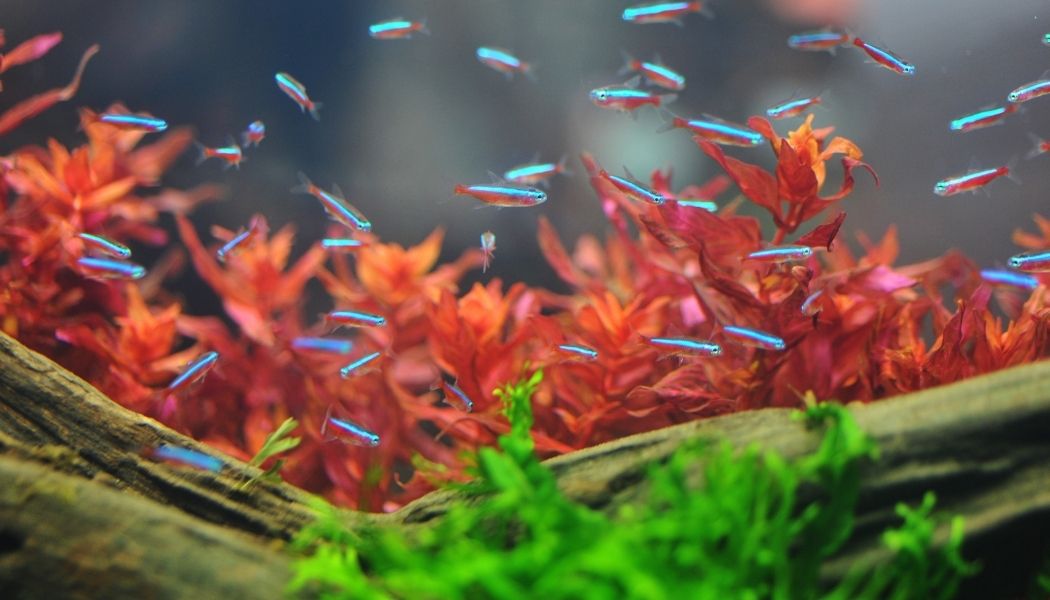
Freshwater Aquarium Fish
Fish ship out on Mondays and Tuesdays to ensure their safety during their...
-
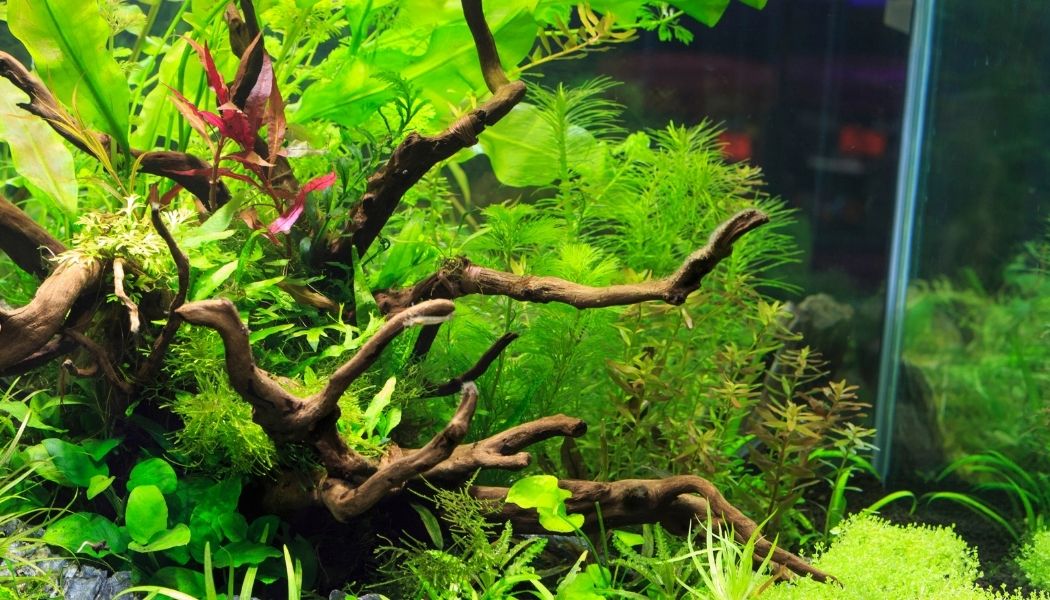
Live Aquatic Plants
Plants ship out on Mondays and Tuesdays to ensure their safety during their...
-
Fish Tank Supplies
All orders are shipped out on Mondays and Tuesdays. Find everything you...
-
Aquariums & Stands
Looking to upgrade your setup? Visit Natural Environment Aquatix in Jacksonville, FL...
