
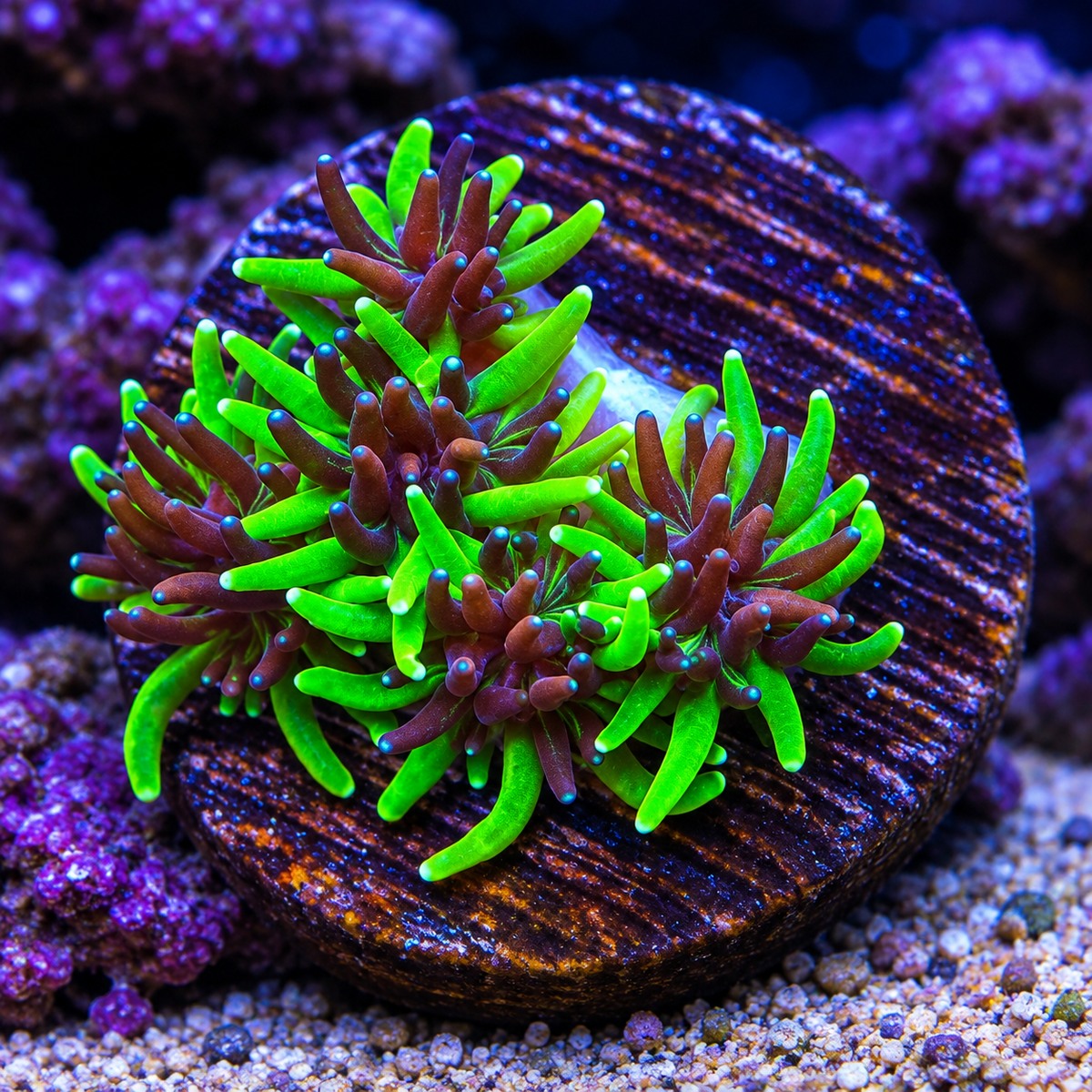
Mardi Gras Galaxea Coral
Mardi Gras Galaxea Coral
Couldn't load pickup availability
Mardi Gras Galaxea Coral – Colorful LPS Coral with Vibrant Green, Purple, and Contrasting Tentacles
Mardi Gras Galaxea Coral is a stunning and highly desirable large-polyp stony (LPS) coral known for its colorful appearance, flowing tentacles, and beautiful star-shaped polyps. This eye-catching coral is an excellent addition to established saltwater reef aquariums, offering vibrant coloration, natural movement, and an impressive display.
Belonging to the genus Galaxea, Mardi Gras Galaxea Coral is an ornamental variety prized for its distinctive multicolored appearance.
Depending on the individual colony and aquarium lighting, Mardi Gras Galaxea may display combinations of fluorescent green, purple, pink, and contrasting darker tones.
Its colorful polyps create a striking appearance under appropriate reef aquarium lighting, especially when illuminated by blue-spectrum or actinic lighting.
One of the most recognizable characteristics of Galaxea Corals is their beautiful tentacle extension.
Each polyp emerges from a hard calcium carbonate skeleton, creating a flowing appearance as the tentacles move with the aquarium's water circulation.
When fully extended, Mardi Gras Galaxea Coral may resemble a colorful field of tiny underwater flowers.
Although Galaxea Corals are classified as LPS corals, their individual polyps are relatively small compared with many other popular large-polyp stony coral species.
Mardi Gras Galaxea Coral is photosynthetic and receives much of its nutritional energy from symbiotic algae living within its tissues.
It can also capture small suspended food particles from the surrounding water.
While supplemental feeding may support healthy growth, stable water chemistry, appropriate lighting, and consistent water movement are the most important factors for long-term success.
One important consideration when keeping Mardi Gras Galaxea Coral is its aggressive behavior toward neighboring corals.
Galaxea Corals are capable of producing long sweeper tentacles containing stinging cells that can damage nearby coral colonies.
For this reason, Mardi Gras Galaxea should be provided with generous spacing and carefully positioned within the aquarium.
A minimum aquarium size of approximately 30 gallons is recommended, although larger reef aquariums provide greater flexibility for placement and future growth.
With its vibrant coloration, beautiful flowing tentacles, and distinctive appearance, Mardi Gras Galaxea Coral makes an impressive addition to established reef aquariums.
Product Specifications
Common Name: Mardi Gras Galaxea Coral, Mardi Gras Galaxea, Multicolor Galaxea Coral
Scientific Name: Galaxea sp. (Exact Species Requires Supplier Confirmation)
Coral Type: Large-Polyp Stony Coral (LPS)
Family: Euphylliidae
Care Level: Moderate
Temperament: Aggressive
Coloration: Green, Purple, Pink, and Contrasting Tones; Varies by Specimen
Growth Form: Massive, Encrusting, or Branching Depending on Species
Growth Rate: Moderate Under Favorable Conditions
Maximum Size: Colonies Can Grow Substantially Larger Over Time
Minimum Tank Size: 30 Gallons
Recommended Tank Size: 55 Gallons or Larger for Mixed Reef Aquariums
Temperature: 75–79°F (24–26°C)
Recommended pH: 8.1–8.4
Specific Gravity: 1.024–1.026
Salinity: Approximately 35 ppt
Alkalinity: Approximately 8–11 dKH
Calcium: Approximately 400–450 ppm
Magnesium: Approximately 1250–1350 ppm
Lighting: Moderate
Suggested PAR: Approximately 100–200 PAR as an Initial Guideline
Water Flow: Moderate, Indirect, and Variable
Placement: Lower to Middle Aquarium Areas, Depending on Lighting and Flow
Diet: Photosynthetic; May Capture Small Marine Food Particles
Feeding Requirements: Supplemental Feeding Optional
Reef Compatibility: Reef Safe with Significant Aggression and Spacing Considerations
Fish Compatibility: Generally Compatible with Reef-Safe Marine Fish
Invertebrate Compatibility: Generally Compatible with Reef-Safe Invertebrates
Propagation: Coral Fragging and Natural Colony Growth
Origin: Indo-Pacific Region, Depending on Species
Recommended Experience: Intermediate Reef Aquarists
Key Features
-
Beautiful multicolored LPS coral
-
Vibrant green, purple, and contrasting coloration
-
Attractive star-shaped polyps
-
Graceful flowing tentacle movement
-
Brilliant appearance under blue reef aquarium lighting
-
Unique named Galaxea coral variety
-
Excellent centerpiece coral when properly positioned
-
Dense polyp extension creates a beautiful textured appearance
-
Photosynthetic coral with optional supplemental feeding
-
Fascinating natural feeding behavior
-
Can develop impressive colonies over time
-
Adds movement and visual interest to reef aquariums
-
Attractive contrast against other colorful corals
-
Excellent addition to established LPS coral collections
-
Distinctive appearance compared with many traditional stony corals
Aquarium Setup and Care Requirements
Aquarium Size: A minimum 30-gallon aquarium is recommended for Mardi Gras Galaxea Coral. Larger aquariums are preferred because they provide additional space for growth and separation from neighboring corals.
Aquascaping: Position the coral on stable live rock or a secure coral platform with adequate open space around the colony.
Placement: Lower to middle aquarium placement is generally a suitable starting point. Final positioning should be based on actual lighting intensity, water flow, and coral response.
Lighting: Moderate reef aquarium lighting is recommended. Excessively intense lighting may cause bleaching or tissue stress if the coral is not properly acclimated.
Water Flow: Moderate, indirect, variable flow helps keep the polyps moving and removes debris without excessively stressing the coral.
Filtration: Maintain efficient biological filtration and stable water chemistry.
Nutrients: Maintain appropriate nitrate and phosphate concentrations. Avoid extremely nutrient-depleted conditions.
Water Chemistry: Maintain stable alkalinity, calcium, magnesium, salinity, temperature, and pH.
Coral Spacing: Provide generous space between Mardi Gras Galaxea Coral and neighboring corals because of its long, aggressive sweeper tentacles.
Maintenance: Regularly inspect the coral for tissue recession, excessive algae growth, and signs of stress.
Acclimation: Gradually introduce the coral to stronger lighting and higher water flow.
Lighting Requirements
Mardi Gras Galaxea Coral is photosynthetic and relies heavily on symbiotic zooxanthellae for its nutritional needs.
These microorganisms live within the coral's tissues and use light energy to produce compounds that support coral growth and maintenance.
Moderate reef aquarium lighting is generally recommended.
A PAR range of approximately 100–200 can be used as an initial guideline, although individual colonies may adapt to conditions outside this range.
Exact lighting requirements depend on aquarium depth, lighting spectrum, previous growing conditions, and acclimation.
Mardi Gras Galaxea Coral may display especially attractive coloration under blue-spectrum reef aquarium lighting.
Its fluorescent pigments can create a striking contrast between the colorful tentacles and darker areas of the colony.
However, lighting should be selected to support coral health rather than coloration alone.
When introducing a new frag or colony, begin in a moderate-light area and gradually adjust placement if necessary.
Sudden exposure to intense lighting may cause tissue stress, bleaching, or reduced polyp extension.
Healthy colonies generally display consistent coloration, tissue coverage, and regular polyp extension.
Water Flow Requirements
Mardi Gras Galaxea Coral generally prefers moderate, indirect water movement.
Appropriate circulation helps deliver nutrients, remove waste, and prevent debris from accumulating between the coral's polyps.
Moderate flow also creates the attractive movement that makes Galaxea Corals so desirable.
However, excessive direct flow may damage delicate tissue or cause the polyps to remain partially retracted.
Avoid positioning the coral directly in front of a powerful wavemaker or return nozzle.
Instead, choose an area where the tentacles move naturally without being continuously pushed in one direction.
Water flow also influences the direction and reach of the coral's sweeper tentacles.
This is especially important when positioning Mardi Gras Galaxea Coral near other coral colonies.
Observe the aquarium's circulation patterns and allow sufficient space in the direction of water movement.
Feeding and Nutrition
Mardi Gras Galaxea Coral receives much of its nutritional energy through photosynthesis.
Its symbiotic zooxanthellae use aquarium lighting to produce energy-rich compounds that support the coral.
However, Galaxea Corals are also capable of capturing small food particles using their tentacles.
Supplemental feeding may support healthy tissue growth and colony development when performed appropriately.
Potential foods include:
-
Frozen mysis shrimp in appropriately sized portions
-
Enriched frozen brine shrimp
-
Small marine plankton preparations
-
Fine particulate coral foods
-
Appropriately sized zooplankton
-
Other high-quality foods formulated for LPS corals
Target feeding may be performed occasionally, depending on the aquarium's nutrient levels and the coral's response.
Use small amounts of food and avoid forcing food directly against the coral's tissue.
Not every colony requires frequent supplemental feeding.
Excessive feeding may contribute to elevated nitrate and phosphate concentrations.
Maintaining stable water chemistry, appropriate lighting, and adequate circulation is generally more important than frequent direct feeding.
Stunning Mardi Gras Coloration
One of the most desirable characteristics of Mardi Gras Galaxea Coral is its colorful appearance.
The Mardi Gras trade name is associated with contrasting colors that may include shades of green, purple, and pink.
Depending on the specimen, fluorescent green highlights may contrast against darker purple or reddish tones.
Under blue reef aquarium lighting, these pigments may become especially vibrant.
When fully extended, the colony creates a beautiful display of colorful tentacles moving gently with the current.
Its dense polyp arrangement gives the coral an attractive textured appearance.
Mardi Gras Galaxea is especially appealing for aquarium enthusiasts looking for a colorful alternative to more traditional green Galaxea varieties.
Color intensity may vary depending on the individual coral, lighting spectrum, nutrient availability, and overall aquarium conditions.
Because Mardi Gras is a trade name rather than a standardized scientific designation, actual coloration should be confirmed from photographs of the specific specimen.
Sweeper Tentacles and Coral Aggression
One of the most important characteristics of Mardi Gras Galaxea Coral is its aggressive behavior toward neighboring corals.
Galaxea Corals can produce long sweeper tentacles that extend well beyond their normal feeding polyps.
These specialized tentacles contain stinging cells called nematocysts.
They are used for defense and competition with nearby organisms.
Sweeper tentacles may extend several inches beyond the colony, and some specimens can produce tentacles reaching approximately 6–12 inches or more under certain conditions.
Their reach varies depending on the colony, aquarium conditions, and water movement.
When these tentacles contact neighboring corals, they may cause tissue damage or recession.
For this reason, Mardi Gras Galaxea Coral should be positioned with generous spacing.
A separation of at least 8–12 inches is a useful starting consideration, but greater distances may be necessary for larger or particularly aggressive colonies.
Spacing should account for both the coral's current size and future growth.
Water flow direction should also be considered because sweeper tentacles may extend toward nearby corals with the current.
An isolated rock structure can be an excellent placement option.
Never assume that a Galaxea Coral is harmless simply because its sweeper tentacles are not visible during the day.
These tentacles may become more noticeable during nighttime hours or feeding periods.
Growth and Colony Development
Mardi Gras Galaxea Coral develops a hard calcium carbonate skeleton that supports its living tissue and polyps.
As the coral grows, new skeletal material is deposited and the colony gradually expands.
Growth patterns vary depending on the exact species and environmental conditions.
Some colonies develop rounded or massive structures, while others display branching or irregular growth forms.
Healthy growth depends on stable alkalinity, calcium, magnesium, appropriate lighting, and sufficient nutrients.
Over time, an established colony may become a prominent feature within the aquarium.
Because Galaxea Coral can produce aggressive sweeper tentacles, future growth should be considered when selecting its permanent location.
Regular observation helps ensure the coral does not begin damaging neighboring colonies.
Reef Compatibility
Mardi Gras Galaxea Coral can be maintained successfully in established reef aquariums, but its aggressive nature requires careful planning.
Unlike peaceful corals that can be positioned relatively close together, Galaxea Coral needs substantial separation from neighboring colonies.
Its sweeper tentacles may sting soft corals, LPS corals, SPS corals, and other nearby reef organisms.
For this reason, it is best maintained on an isolated rock structure or in a dedicated area of the aquarium.
Mardi Gras Galaxea Coral is generally compatible with many common reef-safe fish, including:
-
Clownfish
-
Gobies
-
Blennies
-
Cardinalfish
-
Fairy Wrasses
-
Possum Wrasses
-
Other appropriately selected reef-safe marine fish
Avoid fish known to nip or consume coral tissue.
Certain Angelfish, Butterflyfish, and other coral-feeding species may damage Galaxea Coral.
Many reef-safe shrimp, snails, and other invertebrates can coexist with the coral, although direct contact with its stinging tentacles may cause irritation or injury.
Mardi Gras Galaxea vs. Evergreen Galaxea
Mardi Gras Galaxea and Evergreen Galaxea belong to the same coral genus and share many similar care requirements.
Both are photosynthetic LPS corals that require stable reef aquarium conditions, moderate lighting, and appropriate water movement.
Both can also produce aggressive sweeper tentacles that may damage neighboring corals.
The primary difference between these aquarium trade varieties is their advertised coloration.
Mardi Gras Galaxea Coral: Typically marketed for its contrasting multicolored appearance, which may include green, purple, pink, or other complementary tones.
Evergreen Galaxea Coral: Typically marketed for its predominantly green or fluorescent green appearance.
Actual colors may vary between specimens and suppliers.
Both varieties require generous spacing and careful placement.
Neither should be positioned directly beside delicate or slow-growing corals.
Placement in Mixed Reef Aquariums
Mardi Gras Galaxea Coral can make an impressive centerpiece in a mixed reef aquarium when positioned correctly.
Its flowing tentacles and colorful appearance create attractive movement and visual contrast.
However, placement must prioritize adequate spacing.
An isolated rock island is often an excellent choice because it allows the coral to expand without immediately contacting neighboring colonies.
Avoid placing delicate SPS or LPS corals directly down-current from Galaxea Coral.
The coral's sweeper tentacles may extend with the water movement and damage nearby tissue.
When planning the aquascape, consider how large the colony may become over time.
Allow sufficient open space around the coral.
Proper placement helps preserve both the beauty of the Mardi Gras Galaxea Coral and the health of neighboring reef inhabitants.
Natural Habitat and Behavior
Galaxea Corals naturally inhabit tropical reef environments throughout portions of the Indo-Pacific region.
Depending on the species, they may be found on reef slopes, protected reef areas, and other suitable hard substrates.
In these environments, they grow attached to stable surfaces and rely on light, water movement, and available nutrients.
Their tentacles extend outward to capture small food particles and interact with the surrounding environment.
In home aquariums, Mardi Gras Galaxea Coral may display regular daily patterns of polyp extension.
The colony may appear fuller during certain periods of the day.
Longer sweeper tentacles may become more noticeable during nighttime hours.
These behaviors are normal characteristics of Galaxea Corals.
Their combination of attractive coloration, polyp movement, and natural feeding behavior makes them fascinating additions to reef aquarium displays.
Health and Acclimation Considerations
Mardi Gras Galaxea Coral is generally adaptable once established in a stable reef aquarium.
However, sudden changes in water chemistry, lighting, or water flow may cause stress.
Newly introduced specimens should be carefully inspected for tissue damage, exposed skeleton, and unwanted pests.
An appropriate coral quarantine and dipping process may help reduce the risk of introducing unwanted organisms.
Only use coral dips suitable for the species and follow the manufacturer's instructions.
During acclimation, gradually introduce the coral to the aquarium's lighting conditions.
Avoid sudden exposure to extremely intense lighting.
Temporary reduction in polyp extension may occur after transportation or handling.
However, persistent tissue recession, bleaching, or prolonged polyp retraction may indicate environmental stress.
Evaluate water chemistry, lighting, flow, pests, and potential contact with neighboring corals if the colony does not recover.
Maintaining stable alkalinity and other important reef parameters is particularly beneficial for long-term skeletal growth.
Propagation and Fragging
Mardi Gras Galaxea Coral may be propagated through careful coral fragging.
Because Galaxea Corals possess hard calcium carbonate skeletons, propagation generally requires specialized coral-cutting equipment.
Fragging should be performed by experienced aquarists using appropriate protective equipment and safe procedures.
Care must be taken to avoid unnecessary damage to living tissue.
Freshly cut fragments should be allowed to recover in stable aquarium conditions.
Successful fragments may gradually resume normal polyp extension and skeletal growth.
Because Galaxea Coral is aggressive, newly propagated frags should also be positioned with adequate spacing from neighboring corals.
Special Care Considerations
-
Maintain stable, fully cycled saltwater conditions.
-
Provide moderate reef aquarium lighting.
-
Gradually acclimate new colonies to stronger lighting.
-
Maintain moderate, indirect water flow.
-
Avoid placing the coral directly in powerful water currents.
-
Maintain stable salinity and temperature.
-
Keep alkalinity, calcium, and magnesium within appropriate reef aquarium ranges.
-
Avoid sudden changes in water chemistry.
-
Maintain suitable nitrate and phosphate availability.
-
Provide generous spacing from neighboring corals.
-
Expect long, aggressive sweeper tentacles.
-
Consider water flow direction when positioning the coral.
-
Use an isolated rock structure when possible.
-
Monitor neighboring corals for signs of stinging damage.
-
Avoid overcrowding the aquarium with aggressive coral species.
-
Inspect new corals for pests before introduction.
-
Use appropriate coral quarantine and dipping procedures.
-
Avoid fish known to nip or consume coral tissue.
-
Remove accumulated debris when necessary.
-
Monitor tissue coverage and polyp extension.
-
Wear protective gloves and eye protection when handling or fragging corals.
-
Maintain regular aquarium maintenance and water testing.
Why Choose Mardi Gras Galaxea Coral?
Mardi Gras Galaxea Coral is a stunning addition to reef aquariums that combines beautiful multicolored appearance, graceful tentacle movement, and fascinating natural behavior.
Its colorful polyps create a unique appearance that distinguishes it from many traditional green Galaxea varieties.
Under appropriate reef aquarium lighting, its contrasting pigments can produce a vibrant and visually impressive display.
As the colony grows, it can develop into an attractive arrangement of flowing polyps that adds movement and texture to the aquarium.
Mardi Gras Galaxea Coral is particularly desirable for aquarium enthusiasts looking to add an unusual named coral variety to an established reef aquarium.
Its moderate care requirements make it a rewarding choice for aquarists who understand the importance of stable water chemistry and proper coral placement.
Although its aggressive sweeper tentacles require careful planning, this coral can become a spectacular centerpiece when given adequate space.
Whether you're expanding an established LPS coral collection, designing a colorful mixed reef aquarium, or looking for a unique Galaxea variety with flowing tentacles and eye-catching coloration, Mardi Gras Galaxea Coral offers beauty, movement, and personality.
Bring a celebration of color to your reef aquarium with Mardi Gras Galaxea Coral! Its vibrant polyps and graceful flowing tentacles make it a standout addition to any established saltwater coral collection.
Note: Mardi Gras Galaxea Coral is an aquarium trade name generally associated with a multicolored Galaxea sp. The exact species and coloration should be confirmed with the supplier. Individual color patterns, growth forms, polyp extension, and appearance may vary depending on lighting, water chemistry, and growing conditions. Galaxea Corals are aggressive and may produce long sweeper tentacles capable of damaging neighboring corals. Generous spacing is essential, and actual tentacle reach may exceed general placement recommendations. Photographs may be representative unless the coral is specifically listed as WYSIWYG (What You See Is What You Get). The size and number of polyps included may vary by the specific product selection.
Share
Shop More
-
Freshwater Aquarium Fish
Fish ship out on Mondays and Tuesdays to ensure their safety during their...
-
Live Aquatic Plants
Plants ship out on Mondays and Tuesdays to ensure their safety during their...
-
Fish Tank Supplies
All orders are shipped out on Mondays and Tuesdays. Find everything you...
-
Aquariums & Stands
Looking to upgrade your setup? Visit Natural Environment Aquatix in Jacksonville, FL...
