
Fiji Foxface
Fiji Foxface
Couldn't load pickup availability
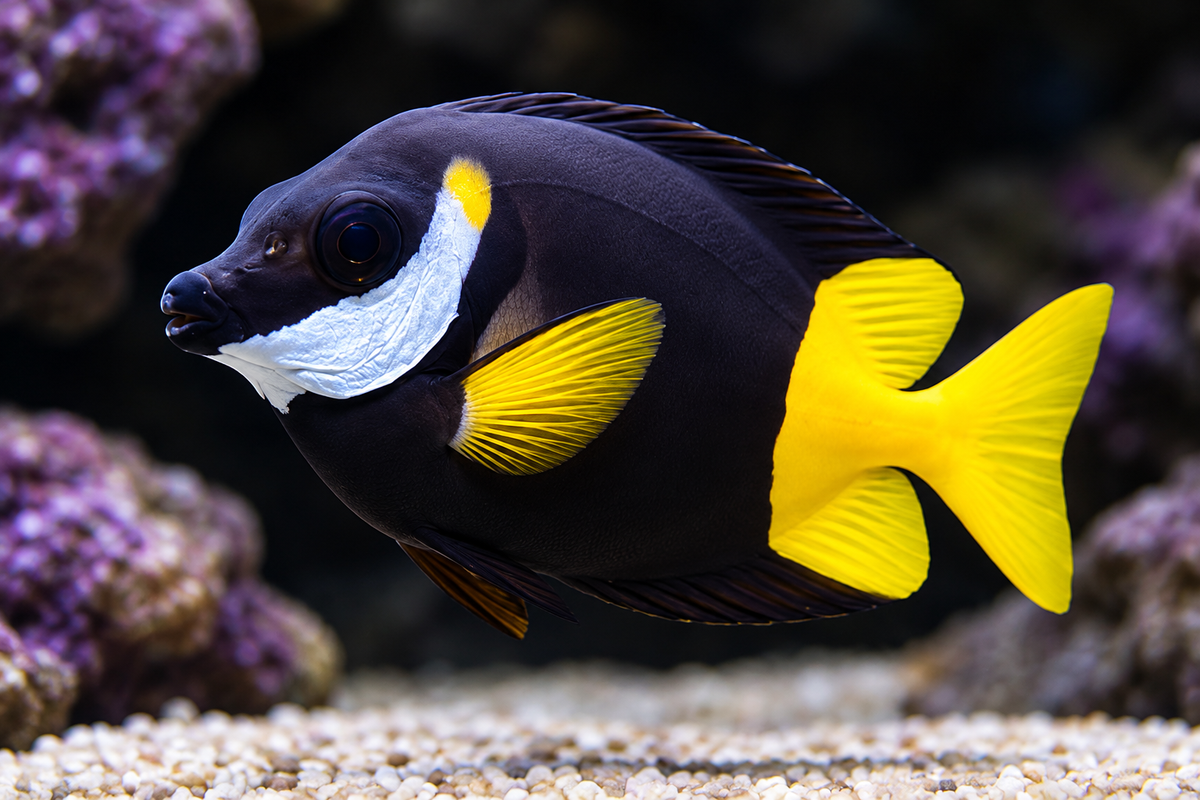
Fiji Foxface (Siganus uspi) – Stunning Black and Yellow Reef-Safe Saltwater Rabbitfish
The Fiji Foxface is a stunning and highly desirable saltwater aquarium fish admired for its striking black-and-yellow coloration, peaceful personality, and natural algae-grazing behavior. Also commonly known as the Bicolor Foxface or Fiji Foxface Rabbitfish, this beautiful marine species is an excellent choice for aquarium enthusiasts looking to add bold tropical coloration and a beneficial algae grazer to their saltwater aquarium.
Scientifically known as Siganus uspi, the Fiji Foxface belongs to the family Siganidae and is native to tropical marine environments around Fiji and nearby South Pacific reef systems.
One of the most recognizable characteristics of the Fiji Foxface is its dramatic two-tone coloration. The front portion of its body displays deep black or dark chocolate-brown pigmentation, while the rear portion features brilliant yellow coloration.
This striking combination creates a beautiful contrast that stands out against live rock, colorful corals, and natural marine aquarium decorations.
Unlike many brightly colored marine fish that require specialized feeding, Fiji Foxface Rabbitfish are primarily herbivorous and spend much of their time grazing on algae throughout the aquarium.
Their natural grazing behavior makes them especially desirable for established marine aquariums where algae management is an important part of maintaining a healthy ecosystem.
Fiji Foxface are known for consuming various types of marine algae, including some filamentous algae and other nuisance algae species.
However, individual feeding preferences vary, and they should not be considered a guaranteed solution for every type of algae problem.
In captivity, Fiji Foxface readily accept high-quality marine herbivore pellets, spirulina-based foods, dried marine algae, and supplemental frozen foods.
Their active swimming behavior and generally peaceful temperament make them attractive additions to appropriately sized marine community aquariums.
Although Fiji Foxface are typically peaceful toward unrelated fish, they may display territorial behavior toward other rabbitfish or similarly shaped species.
One important characteristic of the Fiji Foxface is its venomous dorsal, anal, and pelvic fin spines.
These defensive spines can deliver a painful sting if the fish is handled improperly or accidentally pressed against the skin.
For this reason, careful handling and appropriate aquarium maintenance practices are essential.
Fiji Foxface typically reach approximately 8–9 inches in length, requiring a spacious aquarium with adequate swimming room and established live rock.
A minimum aquarium size of 125 gallons is recommended for long-term care, with larger aquariums preferred for mature specimens.
Fiji Foxface are generally considered reef safe with caution because well-fed individuals often coexist successfully with corals, although some may occasionally nip at soft corals or fleshy large-polyp stony corals.
With its brilliant black-and-yellow coloration, natural algae-grazing behavior, and peaceful personality, the Fiji Foxface is an outstanding addition to a properly maintained large saltwater aquarium.
Product Specifications
Scientific Name: Siganus uspi
Common Name: Fiji Foxface, Bicolor Foxface, Fiji Foxface Rabbitfish
Family: Siganidae
Fish Type: Marine Rabbitfish
Care Level: Moderate
Temperament: Generally Peaceful; May Be Territorial Toward Other Rabbitfish
Diet: Herbivore; Primarily Marine Algae and Plant-Based Foods
Adult Size: Approximately 8–9 Inches
Minimum Tank Size: 125 Gallons
Recommended Tank Size: 150 Gallons or Larger
Temperature: 74–80°F (23–27°C)
Recommended pH: 8.1–8.4
Specific Gravity: 1.023–1.026
Salinity: Approximately 35 ppt
Water Flow: Moderate to Strong, with Sheltered Resting Areas
Water Conditions: Clean, Stable, Well-Oxygenated Saltwater
Recommended Setup: Large Established Reef Aquarium or Fish-Only Marine Aquarium with Live Rock
Swimming Level: Middle Water Column; Frequently Grazes Throughout Rockwork
Compatibility: Peaceful to Moderately Assertive Marine Community Fish
Reef Compatibility: With Caution
Coral Compatibility: Generally Compatible; May Occasionally Nip at Certain Corals
Shrimp Compatibility: Generally Compatible with Established Ornamental Shrimp
Algae Control: May Consume Various Filamentous and Other Marine Algae
Venomous Spines: Yes; Dorsal, Anal, and Pelvic Fin Spines
Origin: Fiji and Nearby South Pacific Waters
Breeding: Egg Layer; Captive Breeding Is Uncommon
Lifespan: Approximately 5–10 Years or Longer with Proper Care
Recommended Experience: Intermediate Saltwater Aquarists
Key Features
-
Stunning black-and-yellow body coloration
-
Beautiful two-tone tropical appearance
-
Natural marine algae-grazing behavior
-
May help reduce certain nuisance algae populations
-
Generally peaceful toward compatible marine fish
-
Active swimming and foraging behavior
-
Excellent addition to larger established marine aquariums
-
Suitable for carefully planned reef aquariums
-
Readily accepts high-quality herbivore foods
-
Fascinating rabbitfish body shape and facial features
-
Distinctive fox-like facial appearance
-
Venomous defensive spines
-
Beautiful contrast against colorful corals and live rock
Aquarium Setup and Care Requirements
Aquarium Size: Provide a minimum 125-gallon aquarium for a Fiji Foxface. A 150-gallon or larger aquarium is preferred for mature specimens and community setups.
Aquascaping: Include substantial live rock, caves, sheltered resting areas, and open swimming space. Fiji Foxface naturally graze throughout rock formations while exploring their surroundings.
Substrate: Aragonite sand or other appropriate marine aquarium substrates are suitable.
Live Rock: Established live rock is highly beneficial because it provides natural algae-grazing surfaces, shelter, and biological filtration.
Lighting: Standard marine aquarium lighting is suitable. Quality reef lighting may support natural algae growth on rock surfaces and enhance the fish's coloration.
Filtration: Use efficient biological and mechanical filtration to maintain excellent water quality.
Water Movement: Moderate to strong circulation is suitable, with calmer areas available for resting.
Diet: Feed a varied herbivorous diet containing dried marine algae, spirulina-based foods, and premium marine herbivore pellets.
Tankmates: Suitable companions may include Clownfish, Tangs, Wrasses, Angelfish, Gobies, and other appropriately sized marine community fish.
Water Chemistry: Maintain stable salinity, temperature, pH, and alkalinity.
Water Quality: Perform regular partial water changes and maintain ammonia and nitrite at zero.
Territory: Provide adequate swimming room and multiple hiding places to reduce competition with other grazing fish.
Long-Term Care: Maintain stable water conditions, consistent feeding, and sufficient swimming space.
Feeding and Nutrition
Fiji Foxface are primarily herbivorous marine fish that naturally consume algae and other plant-based materials.
In captivity, they readily accept a variety of high-quality marine aquarium foods.
Recommended foods include:
-
Dried marine algae sheets
-
Nori seaweed
-
Premium marine herbivore pellets
-
Spirulina-based marine flakes
-
Frozen herbivore preparations
-
Algae-based marine foods
-
Marine macroalgae suitable for herbivorous fish
-
Occasional frozen mysis shrimp
-
Occasional enriched frozen brine shrimp
-
Other nutritionally balanced marine herbivore foods
A diet rich in marine algae and vegetable matter helps support healthy digestion, vibrant coloration, immune function, and long-term vitality.
Offer algae-based foods daily, with multiple feeding opportunities when appropriate.
Dried marine algae can be attached to a feeding clip to encourage natural grazing behavior.
Fiji Foxface frequently spend much of the day searching for algae on live rock and other aquarium surfaces.
Although they may consume nuisance algae, naturally occurring aquarium algae should not be considered a complete diet.
Supplemental feeding is essential, particularly when algae populations become limited.
Avoid overfeeding, as uneaten food can contribute to nutrient buildup and poor water quality.
Natural Algae-Grazing Benefits
One of the most desirable characteristics of the Fiji Foxface is its natural algae-grazing behavior.
In tropical marine environments, rabbitfish consume various types of algae and other plant-based food sources.
In home aquariums, Fiji Foxface may graze on algae growing along live rock, aquarium decorations, and other surfaces.
This behavior can provide a useful contribution to overall aquarium algae management.
Some Fiji Foxface may consume filamentous algae and certain other nuisance algae species.
However, individual preferences vary significantly.
Not every Fiji Foxface will consume every type of algae, and some algae species may be ignored entirely.
Algae control is also influenced by aquarium lighting, nutrient levels, water quality, and maintenance practices.
For best results, combine appropriate herbivorous livestock with responsible aquarium maintenance, nutrient management, and regular water changes.
The Fiji Foxface should be selected as a long-term aquarium inhabitant rather than purchased solely as a temporary algae-control solution.
Temperament and Compatibility
Fiji Foxface are generally peaceful marine fish that can coexist successfully with many appropriately sized saltwater aquarium species.
They are typically not aggressive toward unrelated fish and often spend much of their time swimming and grazing throughout the aquarium.
However, Fiji Foxface may become territorial toward other rabbitfish or similarly shaped species.
Maintaining multiple rabbitfish in the same aquarium requires careful consideration of aquarium size, individual temperament, and available territory.
For most home aquariums, maintaining a single Fiji Foxface is recommended.
Suitable companions may include many Clownfish, Tangs, Wrasses, Angelfish, and other appropriately sized marine community fish.
Avoid housing Fiji Foxface with aggressive predatory species that may repeatedly harass or injure them.
Providing sufficient swimming room and sheltered areas helps reduce stress and encourages natural behavior.
Reef Compatibility
Fiji Foxface are generally considered reef safe with caution.
Many individuals coexist successfully with soft corals, large-polyp stony corals, small-polyp stony corals, and other reef aquarium inhabitants.
They do not typically hunt ornamental shrimp, snails, or other established reef invertebrates.
However, some Fiji Foxface may occasionally nip at coral polyps, particularly fleshy large-polyp stony corals or certain soft corals.
This behavior may become more noticeable when the fish is underfed or when preferred algae-based foods are limited.
Providing a varied herbivorous diet may help reduce unwanted grazing behavior, although coral compatibility cannot be guaranteed.
Aquarists maintaining valuable coral collections should carefully monitor the fish after introduction.
If repeated coral nipping occurs, relocation may be necessary.
With proper feeding and aquarium planning, Fiji Foxface can be attractive additions to many larger reef aquariums.
Venomous Spines and Safe Handling
One of the most important characteristics of the Fiji Foxface is its venomous defensive spines.
Like other rabbitfish, Fiji Foxface possess venomous spines associated with their dorsal, anal, and pelvic fins.
These spines are primarily used for defense against predators.
When frightened or threatened, the fish may extend its spines to discourage potential attackers.
Accidental contact can cause a painful puncture wound.
For this reason, Fiji Foxface should never be handled with bare hands.
Use appropriate aquarium handling equipment and exercise caution during maintenance, aquascaping, and livestock transfers.
Avoid cornering or pressing the fish against aquarium surfaces.
If a sting occurs, seek medical guidance, particularly if severe pain, swelling, allergic symptoms, or other concerning reactions develop.
Their venomous spines do not make Fiji Foxface naturally aggressive toward other fish, but they do require additional care during handling.
Unique Black and Yellow Coloration
The Fiji Foxface is especially desirable because of its dramatic black-and-yellow coloration.
The front portion of its body typically displays deep black or dark chocolate-brown pigmentation.
The rear portion features brilliant yellow coloration, creating a distinctive two-tone appearance.
Its elongated snout and facial structure give it the recognizable fox-like appearance associated with Foxface Rabbitfish.
Under appropriate marine aquarium lighting, the contrast between its dark and bright coloration becomes especially striking.
Like other rabbitfish, Fiji Foxface may temporarily change coloration when stressed, frightened, or resting.
During these periods, their normally vibrant colors may become pale, mottled, or subdued.
This temporary color change is a natural response, although persistent discoloration may indicate stress or poor environmental conditions.
Maintaining stable water conditions and providing a varied diet helps support healthy coloration.
Natural Habitat and Behavior
Fiji Foxface naturally inhabit tropical marine environments around Fiji and nearby South Pacific reef systems.
They are commonly associated with coral reefs, rocky structures, and algae-rich marine habitats.
In these environments, they spend much of their time grazing on algae and exploring reef structures.
Their streamlined bodies and active swimming behavior allow them to move efficiently throughout the reef.
In home aquariums, Fiji Foxface frequently establish daily grazing routines.
They may move from one rock formation to another while searching for algae and other food sources.
When startled, they often retreat into nearby caves or sheltered areas.
They may also display temporary changes in coloration while resting or responding to stress.
Their active grazing behavior and peaceful personality make them interesting additions to larger marine displays.
Breeding Information
Fiji Foxface are egg-laying marine fish.
Like other rabbitfish, they reproduce through spawning in marine environments.
Successful captive breeding requires compatible mature specimens, appropriate environmental conditions, and specialized larval-rearing techniques.
Raising marine rabbitfish larvae is challenging because newly hatched fish require carefully controlled water conditions and appropriately sized foods.
Captive breeding of Fiji Foxface is uncommon in typical home aquariums.
A dedicated marine breeding and larval-rearing system is generally necessary for successful propagation.
Special Care Considerations
-
Maintain stable, fully cycled saltwater conditions.
-
Provide a spacious aquarium suitable for the fish's adult size.
-
Include substantial live rock and natural hiding places.
-
Offer a varied diet rich in marine algae and vegetable matter.
-
Provide dried marine algae or nori regularly.
-
Do not rely exclusively on naturally occurring aquarium algae.
-
Maintain stable salinity and temperature.
-
Avoid sudden changes in water chemistry.
-
Monitor territorial behavior toward other rabbitfish.
-
Provide adequate swimming room and sheltered resting areas.
-
Choose compatible tankmates that are not excessively aggressive.
-
Monitor coral colonies for signs of unwanted grazing.
-
Maintain excellent filtration and regular aquarium maintenance.
-
Use careful acclimation when introducing new specimens.
-
Exercise caution around venomous dorsal, anal, and pelvic fin spines.
-
Avoid handling the fish with bare hands.
-
Maintain a secure aquarium cover.
-
Observe feeding behavior during acclimation.
-
Understand that nuisance algae consumption varies between individual specimens.
Why Choose the Fiji Foxface?
The Fiji Foxface is a stunning marine fish that combines dramatic black-and-yellow coloration, peaceful behavior, and beneficial natural algae-grazing habits.
Its distinctive two-tone appearance creates a beautiful contrast against colorful corals, live rock, and natural marine aquarium decorations.
Unlike many ornamental marine fish, the Fiji Foxface may also contribute to algae management by grazing on various types of marine algae.
Its active swimming behavior and curious personality make it especially entertaining to observe.
The Fiji Foxface is an attractive option for aquarium enthusiasts looking for a colorful marine fish that provides both visual appeal and potential practical benefits.
Its generally peaceful temperament makes it suitable for many appropriately stocked large saltwater aquariums.
Whether you're building a spacious fish-only marine aquarium, expanding an established reef display, or looking for a colorful herbivorous fish with natural grazing behavior, the Fiji Foxface offers beauty, activity, and personality.
If you're searching for a vibrant saltwater fish with striking black-and-yellow coloration, peaceful behavior, and natural algae-grazing abilities, the Fiji Foxface is an outstanding choice.
Note: This listing refers to the Fiji Foxface, Siganus uspi, which is distinct from the more common Foxface Rabbitfish, Siganus vulpinus. Individual size, coloration, temperament, and algae-feeding preferences may vary. Fiji Foxface possess venomous dorsal, anal, and pelvic fin spines that can cause painful injuries if handled improperly. Although generally compatible with many reef aquariums, some individuals may nip at certain corals. Algae consumption and coral compatibility cannot be guaranteed. Photographs may be representative unless the fish is specifically listed as WYSIWYG (What You See Is What You Get).
Share
Shop More
-
Freshwater Aquarium Fish
Fish ship out on Mondays and Tuesdays to ensure their safety during their...
-
Live Aquatic Plants
Plants ship out on Mondays and Tuesdays to ensure their safety during their...
-
Fish Tank Supplies
All orders are shipped out on Mondays and Tuesdays. Find everything you...
-
Aquariums & Stands
Looking to upgrade your setup? Visit Natural Environment Aquatix in Jacksonville, FL...
