
Blue Leg Hermit Crab
Blue Leg Hermit Crab
Couldn't load pickup availability
Blue Leg Hermit Crab (Clibanarius tricolor) – Colorful Saltwater Aquarium Cleanup Crew
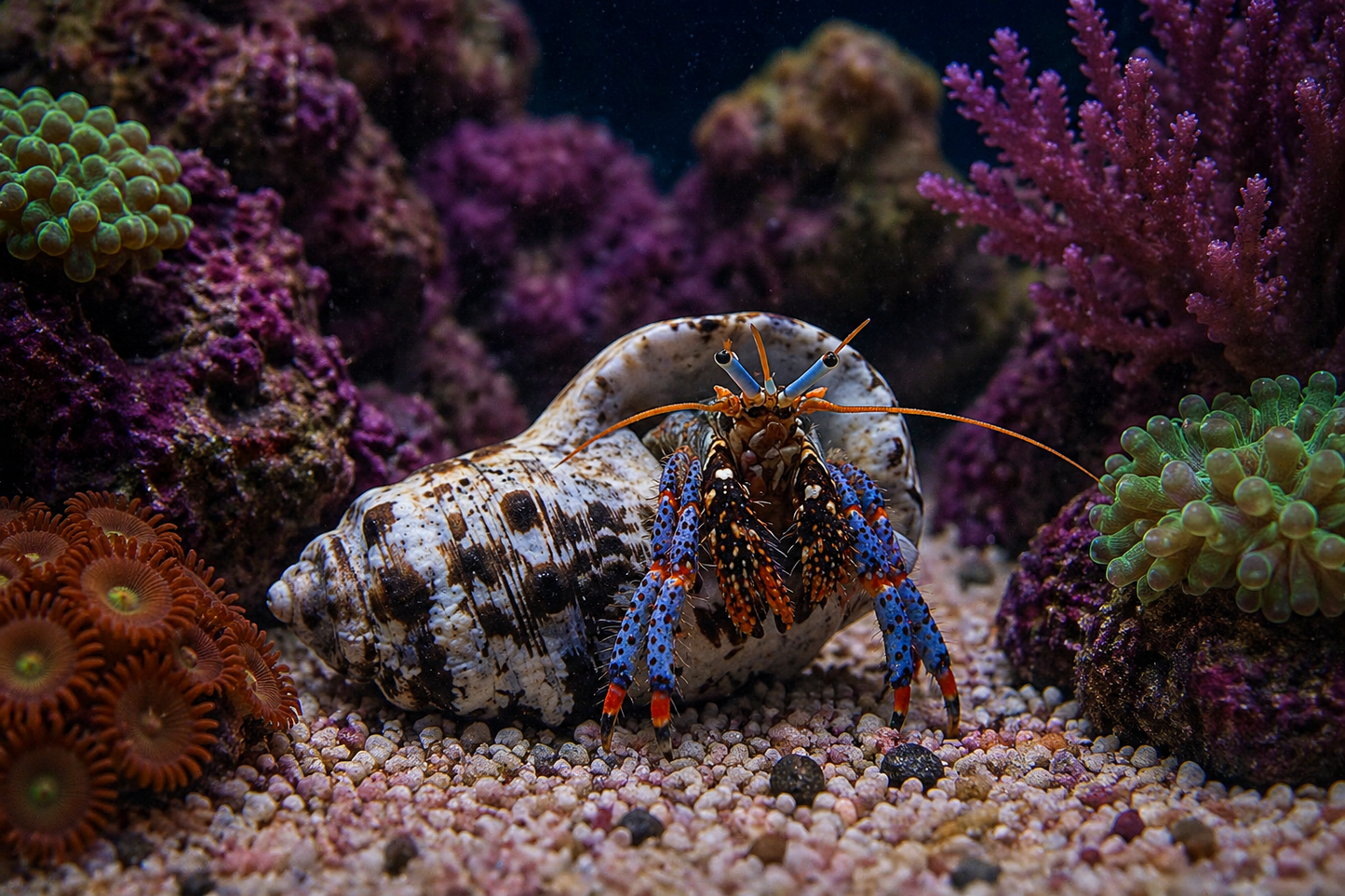
The Blue Leg Hermit Crab is a popular and colorful marine invertebrate admired for its vibrant blue legs, distinctive black banding, and natural algae-grazing behavior. Commonly known as the Blue Legged Hermit Crab or Blue Leg Reef Hermit Crab, this small but active crustacean is an excellent addition to established saltwater aquariums and reef cleanup crews.
Scientifically known as Clibanarius tricolor, the Blue Leg Hermit Crab belongs to the family Diogenidae and is native to tropical marine environments throughout the Caribbean Sea and western Atlantic Ocean.
One of the most recognizable characteristics of the Blue Leg Hermit Crab is its brilliant blue legs decorated with contrasting dark bands and orange or red accents. Its colorful appearance creates an attractive contrast against live rock, white sand, and colorful reef aquarium decorations.
Unlike true crabs, hermit crabs possess a soft, vulnerable abdomen that must remain protected inside an empty snail shell. As the Blue Leg Hermit Crab grows, it searches for larger shells that provide adequate protection.
Blue Leg Hermit Crabs are particularly popular in marine aquariums because of their natural scavenging and algae-grazing behavior. They actively explore live rock, aquarium decorations, and substrate surfaces while searching for food.
These small crustaceans may consume certain types of nuisance algae, including soft green algae, film algae, and some filamentous algae. They also scavenge leftover fish food and organic debris.
Their small size allows them to explore narrow crevices and areas that larger cleanup crew animals may have difficulty reaching.
Although Blue Leg Hermit Crabs are generally considered reef compatible, they can be opportunistic and may occasionally compete with snails or other hermit crabs for shells.
Providing an assortment of empty shells in appropriate sizes helps reduce shell-related aggression and encourages natural growth.
Blue Leg Hermit Crabs are active throughout the day and may become especially noticeable during feeding periods. Their constant movement and colorful legs make them fascinating additions to marine aquariums.
A minimum aquarium size of 10 gallons is suitable for a small number of Blue Leg Hermit Crabs, provided the aquarium is fully cycled and contains adequate natural food sources.
The ideal aquarium should include established live rock, aragonite sand, natural hiding places, and a selection of empty marine snail shells.
Blue Leg Hermit Crabs are omnivorous scavengers that consume algae, biofilm, detritus, and various marine foods. Supplemental feeding may be necessary when natural algae and leftover food become limited.
With their brilliant blue coloration, active personality, and useful scavenging behavior, Blue Leg Hermit Crabs are excellent additions to saltwater fish-only and reef aquariums.
Product Specifications
Scientific Name: Clibanarius tricolor
Common Name: Blue Leg Hermit Crab, Blue Legged Hermit Crab, Blue Leg Reef Hermit Crab, Dwarf Blue Leg Hermit Crab
Family: Diogenidae
Invertebrate Type: Marine Hermit Crab
Care Level: Easy to Moderate
Temperament: Generally Peaceful but Opportunistic; May Compete for Shells
Diet: Omnivore; Algae, Biofilm, Detritus, and Leftover Marine Foods
Adult Size: Approximately 0.5–1 Inch in Body Size; Overall Size Varies with Shell
Minimum Tank Size: 10 Gallons
Recommended Tank Size: 20 Gallons or Larger for Multiple Specimens
Temperature: 72–78°F (22–26°C)
Recommended pH: 8.1–8.4
Specific Gravity: 1.023–1.026
Salinity: Approximately 35 ppt
Alkalinity: 8–12 dKH
Calcium: 380–450 ppm
Magnesium: 1250–1350 ppm
Water Flow: Gentle to Moderate
Water Conditions: Stable, Fully Cycled Saltwater Aquarium
Recommended Setup: Established Marine Aquarium with Live Rock, Sand, and Spare Shells
Aquarium Placement: Substrate, Live Rock, and Rock Crevices
Reef Compatibility: Generally Reef Safe with Caution
Fish Compatibility: Peaceful Marine Fish That Do Not Prey on Crustaceans
Shrimp Compatibility: Generally Compatible with Healthy Ornamental Shrimp
Snail Compatibility: With Caution; Shell Competition May Occur
Coral Compatibility: Generally Safe; May Accidentally Disturb Loose Coral Fragments
Origin: Caribbean Sea and Western Atlantic Ocean
Breeding: Egg Layer with Planktonic Larval Development
Lifespan: Commonly Around 1–3 Years; May Vary with Conditions
Recommended Experience: Beginner to Intermediate Saltwater Aquarists
Key Features
-
Brilliant blue legs with contrasting dark bands
-
Popular addition to marine aquarium cleanup crews
-
Naturally grazes on certain nuisance algae
-
Helps consume leftover fish food and organic debris
-
Small size suitable for nano and larger marine aquariums
-
Active exploration of live rock and substrate
-
Generally compatible with established reef aquariums
-
Fascinating shell-changing behavior
-
Attractive blue, black, and orange coloration
-
Useful scavenger for hard-to-reach aquarium areas
-
Excellent addition to diverse marine cleanup crews
-
Interesting behavior and constant aquarium activity
Aquarium Setup and Care Requirements
Aquarium Size: Provide a minimum 10-gallon aquarium for a small number of Blue Leg Hermit Crabs. Larger aquariums offer more natural grazing surfaces, stable water conditions, and additional space for multiple cleanup crew members.
Aquascaping: Include established live rock, coral rubble, and natural hiding places. Blue Leg Hermit Crabs enjoy exploring rock formations and searching for food in crevices.
Substrate: Aragonite sand or other suitable marine substrates are recommended.
Live Rock: Established live rock provides natural algae, biofilm, shelter, and scavenging opportunities.
Lighting: Standard marine or reef aquarium lighting is suitable. Blue Leg Hermit Crabs do not require specialized lighting.
Filtration: Use efficient biological and mechanical filtration to maintain excellent water quality.
Water Movement: Gentle to moderate circulation is appropriate, with areas where the crabs can graze without excessive current.
Diet: Provide natural algae, biofilm, leftover marine foods, and occasional supplemental algae-based or omnivorous invertebrate foods.
Spare Shells: Maintain a selection of empty marine snail shells in different sizes and shapes. Providing suitable shells helps reduce competition and allows growing hermit crabs to find appropriate protection.
Tankmates: Suitable companions include peaceful Clownfish, Gobies, Blennies, Royal Grammas, and other nonpredatory marine species.
Water Chemistry: Maintain stable salinity, temperature, pH, alkalinity, calcium, and magnesium.
Copper Sensitivity: Blue Leg Hermit Crabs are highly sensitive to copper-based medications and should never be introduced into aquariums containing therapeutic copper concentrations.
Water Quality: Maintain ammonia and nitrite at zero and avoid sudden changes in salinity or temperature.
Acclimation: Carefully acclimate Blue Leg Hermit Crabs to the aquarium, particularly when salinity differs between systems.
Feeding and Nutrition
Blue Leg Hermit Crabs are omnivorous scavengers that consume a variety of natural food sources in established marine aquariums.
They spend much of their time grazing on aquarium surfaces and searching for leftover food.
Recommended foods include:
-
Natural marine biofilm
-
Soft green algae
-
Film algae
-
Certain filamentous algae
-
Marine algae sheets
-
Spirulina-based sinking pellets
-
Quality marine invertebrate foods
-
Small portions of frozen mysis shrimp
-
Small portions of frozen brine shrimp
-
Other appropriate marine omnivore foods
Although Blue Leg Hermit Crabs naturally consume algae and organic debris, supplemental feeding may be necessary when natural food sources become limited.
Providing adequate nutrition helps maintain healthy growth and may reduce competition for available food.
Avoid excessive feeding, as uneaten food can contribute to nutrient buildup and poor water quality.
Natural Algae Control and Cleanup Crew Benefits
Blue Leg Hermit Crabs are popular additions to saltwater aquarium cleanup crews because of their natural grazing and scavenging behavior.
They may help consume certain types of nuisance algae, including soft green algae, film algae, and some filamentous algae.
They also search for leftover fish food and organic debris among live rock and along the substrate.
Their small size allows them to access crevices and spaces that may be difficult for larger cleanup crew animals to reach.
Blue Leg Hermit Crabs are especially useful as part of a diverse cleanup crew containing compatible snails and other marine invertebrates.
However, they should not be expected to eliminate all types of nuisance algae.
They are not guaranteed to control bubble algae, cyanobacteria, or severe hair algae outbreaks.
Proper nutrient management, filtration, water changes, and appropriate lighting remain essential for maintaining a healthy marine aquarium.
Temperament and Reef Compatibility
Blue Leg Hermit Crabs are generally considered reef compatible, but they can be opportunistic scavengers.
They typically coexist successfully with many corals, peaceful marine fish, and healthy ornamental shrimp.
However, Blue Leg Hermit Crabs may occasionally display aggression toward other hermit crabs or snails, particularly when competing for suitable shells.
Even well-fed hermit crabs may sometimes attack snails to obtain their shells.
Providing an assortment of empty shells helps reduce competition but does not completely eliminate the possibility.
Blue Leg Hermit Crabs may also climb across corals or accidentally dislodge unsecured coral fragments while searching for food.
Secure coral frags and monitor interactions in aquariums containing delicate invertebrates.
Avoid housing Blue Leg Hermit Crabs with predatory fish such as certain Triggerfish, Puffers, and larger Wrasses that may consume crustaceans.
Shell Changing and Molting
One of the most fascinating behaviors of Blue Leg Hermit Crabs is their dependence on empty snail shells for protection.
Unlike true crabs, hermit crabs possess a soft abdomen that must remain protected inside a shell.
As the crab grows, it periodically searches for a larger shell.
Providing multiple empty shells of suitable sizes is important for long-term care.
Blue Leg Hermit Crabs also undergo molting, a natural process in which they shed their external skeleton to accommodate growth.
During molting, the crab may remain hidden inside its shell or beneath rockwork while its new exoskeleton hardens.
Aquarists may occasionally discover a discarded exoskeleton that resembles a dead crab.
Avoid disturbing hermit crabs during or immediately after molting.
Stable marine water chemistry and appropriate nutrition help support healthy growth and successful molts.
Breeding Information
Blue Leg Hermit Crabs reproduce sexually, with females carrying fertilized eggs before releasing larvae into the water column.
After hatching, the larvae undergo planktonic developmental stages before eventually settling and developing into juvenile hermit crabs.
Successful captive breeding and larval rearing are uncommon in typical home aquariums.
The larvae require specialized planktonic foods, appropriate water conditions, and protection from filtration systems and predators.
A dedicated marine breeding and larval-rearing system is generally necessary for successful propagation.
Special Care Considerations
-
Maintain stable marine salinity and water chemistry.
-
Never expose Blue Leg Hermit Crabs to copper-based medications.
-
Provide established live rock and natural grazing surfaces.
-
Keep a selection of empty shells available for growth.
-
Supplement feeding when natural algae and food sources become limited.
-
Monitor interactions with snails and other hermit crabs.
-
Avoid aggressive fish that prey on crustaceans.
-
Maintain appropriate calcium, magnesium, and alkalinity levels.
-
Provide secure rock structures and natural hiding places.
-
Use careful acclimation when introducing new specimens.
-
Avoid sudden changes in temperature or specific gravity.
-
Do not disturb hermit crabs during molting.
-
Secure loose coral fragments to prevent accidental displacement.
-
Avoid overcrowding cleanup crew members.
-
Maintain a fully cycled and stable saltwater aquarium.
-
Monitor food availability and overall crab activity.
Why Choose the Blue Leg Hermit Crab?
The Blue Leg Hermit Crab is a colorful and beneficial marine invertebrate that combines striking appearance, active behavior, and useful scavenging habits.
Its brilliant blue legs and contrasting dark bands create a beautiful display against live rock, sand, and colorful reef environments.
Unlike purely decorative aquarium invertebrates, Blue Leg Hermit Crabs actively explore their surroundings while searching for algae, leftover food, and organic debris.
Their small size makes them particularly useful for exploring crevices and hard-to-reach areas within established marine aquariums.
The Blue Leg Hermit Crab is also fascinating to observe as it climbs across rockwork, searches for food, and periodically changes shells as it grows.
Whether you're building a new saltwater cleanup crew, maintaining an established reef aquarium, or adding colorful invertebrates to a marine display, the Blue Leg Hermit Crab brings beauty, activity, and natural scavenging behavior to your aquatic environment.
If you're looking for a vibrant, active marine hermit crab that may help manage nuisance algae and leftover food while adding personality to your saltwater aquarium, the Blue Leg Hermit Crab is an excellent choice.
Note: This listing refers to the Blue Leg Hermit Crab, Clibanarius tricolor, and not other blue-legged hermit crab species that may occasionally be sold under similar common names. Individual size, coloration, feeding preferences, and temperament may vary. Although generally considered reef compatible, Blue Leg Hermit Crabs may occasionally compete with snails or other hermit crabs for shells. Provide spare shells, adequate food sources, and appropriate hiding places. Photographs may be representative unless the specimen is specifically listed as WYSIWYG (What You See Is What You Get).
Share
Shop More
-
Freshwater Aquarium Fish
Fish ship out on Mondays and Tuesdays to ensure their safety during their...
-
Live Aquatic Plants
Plants ship out on Mondays and Tuesdays to ensure their safety during their...
-
Fish Tank Supplies
All orders are shipped out on Mondays and Tuesdays. Find everything you...
-
Aquariums & Stands
Looking to upgrade your setup? Visit Natural Environment Aquatix in Jacksonville, FL...
