
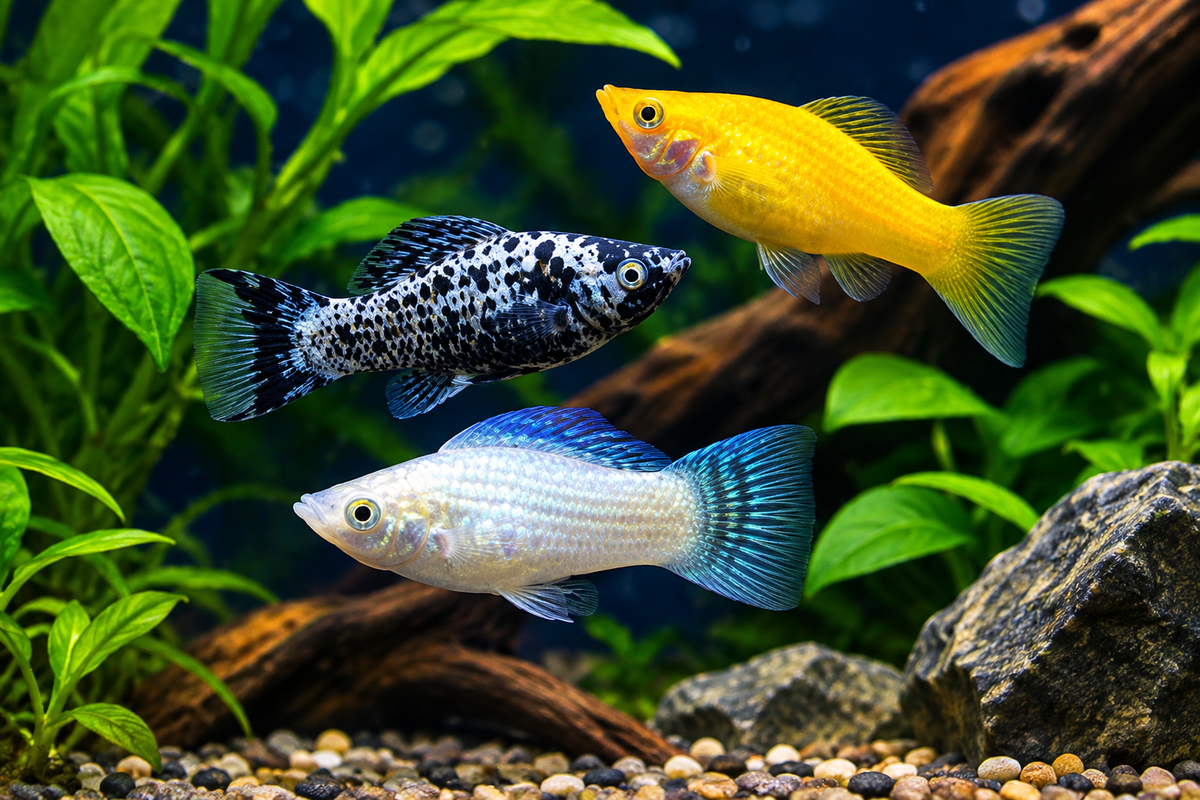
Assorted XL Molly
Assorted XL Molly
Couldn't load pickup availability
Molly Fish (Poecilia spp.) – Colorful Livebearing Freshwater Aquarium Fish
The Molly Fish is one of the most popular and versatile freshwater aquarium fish, admired for its beautiful coloration, peaceful personality, and active swimming behavior. Available in an impressive variety of colors, patterns, and fin shapes, Mollies are an excellent choice for both beginner and experienced aquarium enthusiasts looking to add movement and personality to their freshwater aquariums.
Molly Fish are members of the genus Poecilia, a group of livebearing freshwater fish native to regions of North America, Central America, and northern South America. Common aquarium varieties are associated with species such as Poecilia sphenops, Poecilia latipinna, and Poecilia velifera, along with numerous selectively bred hybrids.
One of the most appealing characteristics of Molly Fish is their incredible diversity of colors and patterns. Popular varieties include Black Mollies, Dalmatian Mollies, Gold Dust Mollies, Silver Mollies, Orange Mollies, Lyretail Mollies, Balloon Mollies, and Sailfin Mollies. Each variety offers its own distinctive appearance, making Mollies a beautiful addition to planted aquariums and peaceful community setups.
Mollies typically have an elongated or moderately rounded body with a slightly upturned mouth and attractive dorsal and tail fins. Depending on the variety, some individuals develop dramatically enlarged dorsal fins, elongated tail extensions, or compact body shapes.
Male Mollies are generally smaller and more slender than females. Males possess a modified anal fin called a gonopodium, which is used during reproduction. Females typically have fuller bodies and can grow larger than males.
Molly Fish are known for their active, social behavior. They spend much of their time exploring the middle and upper portions of the aquarium, grazing on algae, investigating plants, and interacting with other fish.
Although generally peaceful, male Mollies may occasionally chase females or compete with other males. Maintaining an appropriate group structure with more females than males can help reduce persistent breeding-related harassment.
Mollies are omnivores with a strong preference for vegetable matter and algae-based foods. In captivity, they thrive on a balanced diet of high-quality tropical flakes, small pellets, spirulina-based foods, blanched vegetables, and occasional frozen or live foods such as brine shrimp and daphnia.
A well-maintained aquarium with stable water conditions is essential for keeping Mollies healthy. Most standard Molly varieties do well in aquariums of at least 20–30 gallons, while larger Sailfin Mollies require more space.
Mollies generally prefer moderately hard to hard, alkaline freshwater with adequate mineral content. Although some populations naturally inhabit brackish environments, aquarium Mollies do not automatically require added salt when maintained in suitable freshwater conditions.
One of the most fascinating characteristics of Molly Fish is their livebearing reproduction. Unlike egg-laying fish, female Mollies give birth to fully formed, free-swimming fry. Under favorable conditions, Mollies may reproduce frequently, making them popular among aquarists interested in observing fish breeding and raising young.
With their beautiful coloration, peaceful temperament, active swimming behavior, and fascinating reproductive habits, Molly Fish are an outstanding addition to properly maintained freshwater community aquariums.
Product Specifications
Scientific Name: Poecilia spp., Commonly Poecilia sphenops, Poecilia latipinna, Poecilia velifera, and Ornamental Hybrids
Common Name: Molly Fish, Molly, Freshwater Molly
Family: Poeciliidae
Fish Type: Freshwater Livebearer
Care Level: Easy to Moderate
Temperament: Generally Peaceful and Social
Diet: Omnivore; Benefits from Vegetable-Based Foods
Adult Size: Approximately 3–5 Inches for Common Varieties; Large Sailfin Varieties May Reach 6 Inches or More
Minimum Tank Size: 20–30 Gallons for Standard Varieties; 40–55+ Gallons Recommended for Larger Sailfin Varieties
Temperature: 75–82°F (24–28°C)
Recommended pH: 7.2–8.5
Water Hardness: Moderately Hard to Hard
Water Flow: Gentle to Moderate
Water Conditions: Clean, Stable, Mineral-Rich Freshwater
Recommended Setup: Planted Community Aquarium with Open Swimming Areas
Swimming Level: Middle to Upper
Compatibility: Peaceful Community Fish with Similar Water Requirements
Plant Compatibility: Excellent; May Graze on Soft Plant Growth and Algae
Origin: North America, Central America, and Northern South America, Depending on Species
Breeding: Livebearer
Lifespan: Approximately 3–5 Years with Proper Care
Recommended Experience: Beginner to Intermediate Aquarists
Popular Molly Fish Varieties
Black Molly: A classic aquarium favorite featuring beautiful solid black coloration and an elegant body shape.
Dalmatian Molly: Displays attractive black-and-white spotting that resembles the pattern of a Dalmatian dog.
Gold Dust Molly: Features a striking combination of golden yellow and black coloration.
Silver Molly: Known for its bright silver or white body and graceful swimming movements.
Orange Molly: Displays vibrant orange or golden-orange coloration that adds warmth to freshwater aquariums.
Lyretail Molly: Recognized for its elongated upper and lower tail extensions that create an elegant lyre-shaped appearance.
Sailfin Molly: Features an impressive enlarged dorsal fin, particularly prominent in mature males.
Balloon Molly: A selectively bred variety with a shortened, rounded body. Its altered body structure may increase susceptibility to swimming and health problems, requiring additional care.
Marble Molly: Features beautiful irregular patterns of black, white, gray, or other contrasting colors.
Creamsicle Molly: Displays attractive combinations of orange and white coloration.
Key Features
-
Available in numerous beautiful colors and patterns
-
Peaceful and active freshwater community fish
-
Excellent choice for planted aquariums
-
Fascinating livebearing reproduction
-
Naturally grazes on algae and biofilm
-
Compatible with many peaceful freshwater species
-
Easy to feed with a varied omnivorous diet
-
Social behavior and engaging swimming activity
-
Available in standard, Sailfin, and Lyretail varieties
-
Hardy when maintained in appropriate mineral-rich water
-
Suitable for beginner and experienced aquarium enthusiasts
Aquarium Setup and Care Requirements
Aquarium Size: Provide a minimum 20–30-gallon aquarium for standard Molly varieties. Larger aquariums are recommended for groups and Sailfin Mollies.
Aquascaping: Include live plants, driftwood, smooth rocks, and open swimming areas. Mollies enjoy exploring planted environments and grazing on submerged surfaces.
Substrate: Sand, fine gravel, or planted aquarium substrates are suitable, provided water chemistry remains appropriate.
Lighting: Moderate aquarium lighting is recommended. Adequate lighting can support healthy aquatic plant growth and natural algae grazing.
Filtration: Use efficient biological and mechanical filtration to maintain stable water conditions. Mollies benefit from good oxygenation and consistent aquarium maintenance.
Diet: Feed high-quality tropical flakes or pellets supplemented with spirulina, algae-based foods, blanched vegetables, and occasional frozen foods.
Tankmates: Suitable companions include Platies, Swordtails, appropriately selected Rainbowfish, and other peaceful community fish that tolerate similar water conditions.
Water Chemistry: Maintain moderately hard to hard, alkaline freshwater. Mollies may become stressed when maintained in excessively soft or acidic water.
Water Quality: Perform regular partial water changes and monitor ammonia, nitrite, and nitrate. Ammonia and nitrite should remain at zero.
Group Size: Mollies are social fish and generally do well in small groups. When keeping mixed sexes, maintaining approximately two to three females per male can help distribute male attention.
Long-Term Care: Provide stable water chemistry, balanced nutrition, sufficient swimming space, and compatible tankmates.
Temperament and Compatibility
Molly Fish are generally peaceful and make excellent additions to appropriately stocked freshwater community aquariums.
Their active swimming behavior adds movement throughout the middle and upper areas of the aquarium.
Although Mollies are not typically aggressive, males may occasionally display territorial behavior or persistently pursue females.
Maintaining an appropriate male-to-female ratio and providing planted hiding areas can help reduce stress.
Mollies are best housed with fish that prefer similar alkaline, moderately hard water conditions.
Avoid keeping them with highly aggressive cichlids, large predatory fish, or delicate species that may be stressed by their activity.
Feeding and Nutrition
Molly Fish are omnivores that benefit from a diet containing substantial vegetable matter.
High-quality tropical flakes or small pellets should form the foundation of their diet.
Recommended supplemental foods include:
-
Spirulina flakes and algae-based pellets
-
Blanched zucchini and spinach
-
High-quality vegetable-based tropical foods
-
Frozen or live brine shrimp
-
Daphnia
-
Occasional frozen bloodworms
Mollies naturally graze on algae and biofilm throughout the aquarium, but these should not replace a balanced prepared diet.
A varied feeding routine helps support healthy growth, coloration, and reproductive condition.
Breeding Information
Molly Fish are livebearers, meaning females give birth to fully developed, free-swimming fry rather than laying eggs.
Under favorable aquarium conditions, females may produce multiple broods throughout the year.
Gestation commonly lasts approximately four to six weeks, although timing varies with temperature, age, and other factors.
Females may give birth to dozens of fry, with brood size depending on the fish's maturity, size, and condition.
Female Mollies can also store sperm, allowing them to produce additional broods even after being separated from males.
In community aquariums, dense plants such as Java Moss, Guppy Grass, and floating plants can provide shelter for newborn fry.
Adult Mollies and other aquarium fish may consume fry, so a separate rearing aquarium may be necessary when breeding is desired.
Special Care Considerations
-
Maintain stable, moderately hard to hard freshwater conditions.
-
Provide adequate aquarium space for active swimming.
-
Feed a balanced diet containing vegetable-based foods.
-
Keep compatible fish with similar water requirements.
-
Avoid sudden changes in temperature or water chemistry.
-
Maintain an appropriate male-to-female ratio.
-
Provide plants and hiding areas to reduce stress.
-
Monitor breeding activity to prevent overcrowding.
-
Use effective filtration and perform regular water changes.
-
Provide larger aquariums for Sailfin Molly varieties.
-
Avoid adding aquarium salt routinely unless there is a specific husbandry or treatment reason.
-
Quarantine newly acquired fish before introducing them to established aquariums whenever possible.
Why Choose Molly Fish?
Molly Fish are among the most enjoyable and versatile freshwater aquarium fish available. Their beautiful coloration, active personalities, and wide variety of ornamental forms make them a popular choice for community aquariums.
Whether you prefer the elegant appearance of Black Mollies, the striking patterns of Dalmatian Mollies, or the impressive fins of Sailfin and Lyretail varieties, Mollies offer a wonderful combination of beauty and personality.
Their peaceful nature, fascinating livebearing reproduction, and natural grazing behavior make them especially appealing to aquarists who enjoy colorful, active freshwater fish.
If you're looking for a beautiful freshwater aquarium fish that combines vibrant coloration, engaging behavior, and relatively straightforward care, the Molly Fish is an excellent choice. Whether you're starting a new community aquarium or expanding an established freshwater collection, Mollies bring color, movement, and lasting enjoyment to your aquatic environment.
Note: Molly Fish are available in numerous species, colors, patterns, and selectively bred varieties. Individual coloration, fin development, adult size, and body shape may vary. Care requirements can differ between standard Mollies, Sailfin Mollies, and ornamental hybrids. Some varieties may grow significantly larger than others. Photographs may be representative unless the fish is specifically listed as WYSIWYG (What You See Is What You Get).
Share
Shop More
-
Freshwater Aquarium Fish
Fish ship out on Mondays and Tuesdays to ensure their safety during their...
-
Live Aquatic Plants
Plants ship out on Mondays and Tuesdays to ensure their safety during their...
-
Fish Tank Supplies
All orders are shipped out on Mondays and Tuesdays. Find everything you...
-
Aquariums & Stands
Looking to upgrade your setup? Visit Natural Environment Aquatix in Jacksonville, FL...
